Open post

MMA for Kids in Vancouver: A Parent’s Guide to Getting Started

Finding an activity that keeps children active, focused, and interested can be difficult, especially when school, homework, screen time, and busy family schedules are all competing for attention. For many local families, MMA for Kids in Vancouver has become an appealing option because it combines physical activity with practical skills, discipline, confidence, and structured social interaction. Rather than simply giving children another sport to play, mixed martial arts introduces them to several different movement styles while teaching them how to control their bodies, listen carefully, and progress at their own pace.

For parents in Vancouver, MMA can also be a practical year-round activity. Our rainy fall and winter months can make outdoor sports harder to maintain consistently, while indoor martial arts classes give children somewhere to move, learn, and burn off energy regardless of the weather.

Kids’ MMA is also very different from what many parents picture when they hear the term “mixed martial arts.” Children’s programs are generally structured around age-appropriate instruction, controlled drills, fitness, coordination, and technical development rather than the type of full-contact competition seen in professional MMA.

This guide explains what kids learn, what parents can expect, how MMA may benefit school-age children, and what to look for when choosing a program in Vancouver, BC.

What Is MMA for Kids?

MMA stands for mixed martial arts. As the name suggests, it combines techniques and movement principles from several martial arts instead of focusing on only one style.

A children’s MMA class may introduce elements of:

  • Boxing
  • Kickboxing
  • Brazilian Jiu-Jitsu
  • Wrestling
  • Grappling
  • Basic self-defence
  • Strength and conditioning
  • Mobility and coordination exercises

The exact mix depends on the gym, instructor, and age group.

For younger students, classes usually focus heavily on movement, balance, listening skills, basic technique, and safe partner work. Older children may gradually learn more technical combinations, grappling positions, takedown concepts, and controlled sparring if it is appropriate for the program.

The goal is not to turn children into fighters.

A good youth MMA program should help students become better movers, better listeners, and more confident learners.

Children learn how to punch a pad correctly, maintain balance while kicking, move safely on the ground, understand positioning, and work with training partners without losing control.

That structure makes MMA much more than simply learning how to fight.

What Age Can Kids Start MMA?

There is no single perfect age for every child.

Some martial arts schools offer introductory programs for children as young as four or five, while others begin their MMA programs with children around six, seven, or eight years old.

For school-age children, the ability to listen and follow instructions is often more important than physical strength or athletic ability.

A younger child may be ready if they can:

  • Follow simple instructions
  • Stay engaged for most of a class
  • Respect personal space
  • Work with another child safely
  • Stop an activity when instructed
  • Handle basic corrections from a coach

Older children and preteens can usually work through more complex combinations and technical concepts.

A typical youth program may separate students approximately like this:

Age GroupCommon Training Focus
Ages 5-7Movement, balance, games, basic punches and kicks
Ages 8-10Technique, coordination, partner drills and basic grappling
Ages 11-13More detailed striking, wrestling and ground skills
TeensAdvanced technique, conditioning and optional competition training

These age ranges are only examples. Every Vancouver martial arts gym structures its children’s programs differently.

A trial class is often the best way to determine whether your child is ready.

Benefits of MMA for Kids

Parents often first consider martial arts because they want their child to become more active. Physical fitness is certainly a major benefit, but it is only one part of what children can gain from training.

MMA can challenge children physically, mentally, and socially.

MMA Can Help Build Confidence

Confidence usually develops through repeated small successes.

A child may struggle to perform a kick correctly during their first few classes. After practising the movement repeatedly, they eventually land the technique properly on a pad.

That small improvement matters.

Over time, children begin to understand that they can improve difficult skills through practice.

This mindset can carry into school, sports, and other areas of life.

Instead of thinking, “I’m not good at this,” they start learning to think, “I haven’t learned this yet.”

A well-run MMA class also gives children regular opportunities to experience progress.

They might learn:

  • A new punch combination
  • Better footwork
  • A basic takedown
  • A grappling escape
  • Improved balance
  • A longer conditioning drill

These small achievements can gradually build self-confidence without relying solely on winning games or outperforming other children.

MMA Improves Fitness and Coordination

Mixed martial arts involves nearly the entire body.

Children are constantly moving their feet, rotating their hips, controlling their balance, reacting to partners, and coordinating their hands and legs.

A typical class may involve:

  • Running
  • Jumping
  • Squatting
  • Punching
  • Kicking
  • Crawling
  • Rolling
  • Grappling
  • Balance drills
  • Short conditioning exercises

Because the movements change frequently, MMA can be especially engaging for children who become bored with repetitive workouts.

Training can help develop several physical abilities at the same time.

Cardiovascular Fitness

Pad drills, movement exercises, and conditioning can raise a child’s heart rate and improve endurance.

Balance

Kicking, changing direction, wrestling, and ground movement all require children to control their centre of gravity.

Coordination

Students learn to combine movements such as stepping forward while punching or pivoting while kicking.

Strength

Bodyweight exercises, grappling, and controlled resistance can help children develop functional strength.

Flexibility and Mobility

Warm-ups, kicks, ground movement, and stretching can gradually improve mobility.

For families living in Vancouver, having an indoor activity that provides consistent exercise can be particularly useful during the wetter months.

MMA Teaches Discipline and Focus

Martial arts classes have structure.

Students need to listen when techniques are demonstrated, wait for instructions, practise carefully, and respect the rules of the gym.

That environment naturally encourages focus.

A child cannot perform a new combination properly if they are not paying attention.

Likewise, partner drills require students to control their movement and follow instructions because another person’s safety is involved.

Over time, children learn that progress comes from consistency rather than rushing.

They begin to understand the connection between:

Listening → Practising → Improving

That lesson can be valuable well beyond the gym.

A Healthy Outlet for Energy After School

School days involve a lot of sitting.

Children may spend hours at desks, followed by homework, commuting, and screen time.

By late afternoon, many kids still have plenty of energy.

An MMA class provides a structured place to use it.

Instead of simply running around, students are given specific physical challenges that require both movement and concentration.

For Vancouver families juggling school pickups, homework, and evening activities, a martial arts class can become a helpful part of an after-school routine.

A child can move, train, socialize, and then return home ready to settle into the evening.

MMA Can Help Develop Social Skills

Although MMA is often considered an individual sport, much of the training involves other people.

Children may work with partners during:

  • Pad drills
  • Grappling exercises
  • Movement drills
  • Wrestling practice
  • Technique repetition
  • Controlled sparring

That requires communication and cooperation.

Students learn how to work with children of different sizes, personalities, and experience levels.

They also learn that being a good training partner matters.

A stronger or more experienced child may need to slow down when training with a beginner. A younger student may need to listen carefully to a partner. Both students need to respect boundaries.

Over time, this can help develop patience, teamwork, and awareness of other people.

Is MMA Safe for Kids?

This is naturally one of the first questions parents ask.

Professional MMA can look intense. However, children’s MMA should not resemble a professional cage fight.

Youth programs should place much greater emphasis on:

  • Technical learning
  • Controlled movement
  • Supervision
  • Age-appropriate drills
  • Safety
  • Respect
  • Gradual progression

Children should not be thrown into uncontrolled fighting situations.

A reputable instructor teaches students how to perform movements safely before increasing intensity.

For example, children learning punching may initially practise in the air or on pads rather than against another student.

When learning grappling, they may begin by practising positions and escapes slowly.

When takedowns are introduced, instructors should teach students how to fall properly and control the movement.

What About Sparring?

Parents should ask specifically how sparring is handled.

Some children’s MMA programs may include light, controlled sparring for older or more experienced students. Others may avoid striking sparring entirely for younger age groups.

Sparring should never feel like a playground fight.

It should have:

  • Clear rules
  • Close supervision
  • Appropriate protective equipment
  • Controlled intensity
  • Matching based on size and experience
  • Immediate intervention if students lose control

Parents should feel comfortable asking instructors to explain the gym’s approach before enrolling their child.

What Do Kids Learn in MMA Classes?

One of the advantages of mixed martial arts is variety.

Children are exposed to several different types of movement rather than only one style.

Striking

Striking generally includes punches, kicks, and movement.

Children may learn basic techniques such as:

  • Jab
  • Cross
  • Hook
  • Front kick
  • Round kick
  • Defensive movement
  • Footwork

These techniques are usually practised on pads, bags, or with carefully controlled partners.

Proper technique is more important than power.

Coaches often teach students how to maintain balance, protect themselves, and return to a stable stance after every movement.

Grappling

Grappling focuses on controlling another person without relying on punches or kicks.

Students may learn:

  • Basic positions
  • Escapes
  • Movement
  • Balance
  • Body positioning
  • Takedown defence

Grappling can be particularly useful for developing body awareness.

Children quickly learn that strength alone does not solve every problem. Technique, balance, timing, and patience matter.

Brazilian Jiu-Jitsu

Brazilian Jiu-Jitsu, often called BJJ, focuses heavily on ground grappling.

Children may learn positions such as:

  • Guard
  • Mount
  • Side control
  • Back control

They may also practise escaping from these positions.

Older or more experienced students may be introduced to carefully supervised submissions depending on the program.

For younger children, the focus is often more about positioning, movement, and control.

Wrestling

Wrestling teaches children how to control balance and movement while standing.

They may practise:

  • Stance
  • Level changes
  • Takedown entries
  • Balance
  • Grip control
  • Takedown defence

Wrestling can also be excellent conditioning because it requires continuous movement and whole-body strength.

What Happens During a Kids’ MMA Class?

Every Vancouver gym has its own teaching style, but many children’s classes follow a similar structure.

1. Warm-Up

Classes may begin with:

  • Light jogging
  • Jumping
  • Mobility exercises
  • Animal movements
  • Bodyweight exercises
  • Games

The goal is to prepare students physically while getting their attention focused on the class.

2. Movement and Coordination Drills

Children may practise:

  • Footwork
  • Balance
  • Rolling
  • Crawling
  • Defensive movement
  • Stance changes

These exercises help develop basic athletic skills.

3. Technique Demonstration

The instructor introduces one or two techniques.

Students watch first and then practise slowly.

A coach may break the technique into several steps so children can understand it more easily.

4. Partner Practice

Students work with a partner to repeat the technique.

This is where they learn control and cooperation.

5. Pad, Bag or Grappling Drills

Depending on the day’s lesson, students may practise combinations on pads, work on a heavy bag, or perform grappling exercises.

6. Conditioning or Games

Many children’s programs finish with short fitness drills or games.

This keeps classes fun while still improving endurance and movement.

7. Class Review

The coach may briefly review what students learned before dismissing the class.

The entire session should feel organized, active, and positive.

Does My Child Need to Be Athletic to Start MMA?

No.

Children do not need previous sports experience to begin martial arts.

In fact, MMA can be a good option for children who have not found a sport they enjoy.

A beginner may initially struggle with coordination or endurance, which is completely normal.

The purpose of training is to improve those abilities over time.

Coaches should adjust exercises based on a student’s age and experience.

A child who cannot perform a full push-up, for example, can work toward it gradually.

A child who struggles with balance can practise simpler kicking drills before moving to more advanced techniques.

Progress matters more than starting ability.

MMA for Kids Who Don’t Enjoy Traditional Team Sports

Vancouver offers plenty of popular youth sports, including soccer, hockey, baseball, basketball, swimming, and lacrosse.

But not every child enjoys team sports.

Some children dislike competition for playing time. Others do not enjoy the pressure of having teammates depend on them during a game.

MMA provides a different environment.

Children still train with other students, but their personal progress is largely their own.

They are not waiting on the bench to get into a game.

They are participating throughout the class.

A child can focus on improving their own technique without needing to score goals or beat another team.

This combination of individual progress and group training is one reason martial arts can work well for children who have struggled to connect with traditional sports.

Can MMA Help Kids Deal With Bullying?

Martial arts can contribute to confidence, awareness, and self-control, but it should never be presented as permission to fight.

A responsible MMA program teaches children that physical skills come with responsibility.

Confidence alone can sometimes change how a child handles difficult situations.

A child who feels more secure may be more comfortable:

  • Speaking clearly
  • Setting boundaries
  • Walking away
  • Asking an adult for help
  • Staying calm under pressure

Training can also help children become more aware of personal space and physical situations.

However, instructors should consistently reinforce that fighting at school is not the goal of martial arts.

Physical techniques should be treated as a last resort when personal safety is genuinely threatened.

That philosophy is something Vancouver parents should ask about when visiting a martial arts school.

Does My Child Have to Compete?

No.

Many children practise MMA recreationally and never compete.

They attend classes because they enjoy:

  • Learning techniques
  • Exercising
  • Seeing friends
  • Improving fitness
  • Working toward personal goals

Competition should generally be optional.

Some students eventually become interested in Brazilian Jiu-Jitsu tournaments, kickboxing events, wrestling competitions, or other martial arts contests.

If competition becomes an option, parents should discuss it carefully with the coach and child.

Questions to consider include:

  • Is the child genuinely interested?
  • Are they emotionally ready?
  • Do they understand the rules?
  • Have they trained long enough?
  • How are opponents matched?
  • What safety procedures are used?

Competition can be motivating for some children, but it is not necessary for a child to benefit from MMA.

How to Choose an MMA Gym for Kids in Vancouver

Vancouver and the surrounding Lower Mainland have many martial arts schools, so parents should take time to compare programs.

The closest gym is not automatically the best choice.

Look at the overall environment.

Coaches Who Understand Children

Teaching adults and teaching children are different skills.

A good children’s instructor should be able to explain complicated techniques using simple language.

They should also know how to keep children engaged without turning the entire class into entertainment.

Watch how the instructor responds when a child makes a mistake.

Good coaching should be firm but respectful.

Age-Appropriate Classes

A six-year-old should not necessarily be training exactly the same way as a 13-year-old.

Ask how students are grouped.

Age, size, maturity, and experience may all affect class placement.

Clear Safety Rules

Parents should be able to understand how contact is handled.

Ask:

  • Is sparring required?
  • When is sparring introduced?
  • What protective equipment is used?
  • How are partners matched?
  • How closely are drills supervised?

Staff should be comfortable answering these questions.

A Positive Training Environment

Visit the gym during an actual children’s class if possible.

Pay attention to the atmosphere.

Are students listening?

Are coaches engaged?

Do children seem comfortable?

Is rough behaviour corrected immediately?

A good martial arts gym should feel energetic without feeling chaotic.

Convenient Vancouver Location and Schedule

Location matters more than many parents initially realize.

A great program becomes difficult to maintain if getting there requires fighting Vancouver traffic several evenings every week.

Consider the entire routine.

Think about:

  • School pickup
  • Travel time
  • Parking or transit
  • Dinner
  • Homework
  • Bedtime

If your family lives on Vancouver’s west side, east side, downtown, or near one of the surrounding municipalities, choosing a gym that fits naturally into your schedule may make long-term attendance much easier.

Consistency is far more valuable than choosing a program that looks perfect but is difficult to attend regularly.

What Equipment Does a Child Need for MMA?

Equipment requirements vary by gym.

Beginners may only need comfortable athletic clothing for their first class.

Over time, students may need:

  • Boxing gloves
  • Hand wraps
  • Shin guards
  • Mouthguard
  • Rash guard
  • MMA gloves
  • Grappling shorts
  • Water bottle

Some gyms provide loaner equipment for trial classes.

Parents should avoid purchasing an entire set of equipment before speaking with the instructor.

Different gyms may have specific requirements for glove size, protective gear, or clothing.

What Should Kids Wear to Their First Class?

For a trial class, comfortable athletic clothing is usually appropriate.

Choose clothes that allow easy movement.

A basic outfit might include:

  • Athletic T-shirt
  • Shorts or athletic pants
  • Water bottle

Avoid clothing with:

  • Zippers
  • Large buttons
  • Jewellery
  • Sharp accessories

These items can become uncomfortable or unsafe during grappling.

Indoor footwear rules also vary. Some MMA training areas are barefoot, while others may use specific footwear for certain activities.

Ask before the first class.

Balancing MMA With School and Homework

One of the biggest concerns for Vancouver parents is fitting another activity into an already busy week.

Children may already have school, homework, music lessons, sports, and family commitments.

MMA does not need to take over the schedule.

For beginners, one or two classes per week may be enough to establish a routine.

As children become more interested, families can decide whether to increase training frequency.

A simple weekly routine might look like this:

DayAfter-School Routine
MondayHomework and free evening
TuesdayMMA class
WednesdayHomework or another activity
ThursdayMMA class
FridayFamily or free time
WeekendOptional practice, outdoor activities or rest

There is no perfect schedule.

The important thing is finding a routine that your child can maintain without becoming exhausted or overwhelmed.

What If My Child Is Nervous About Starting?

Walking into a martial arts gym can be intimidating.

Children may see punching bags, gloves, mats, and experienced students and assume everyone already knows what they are doing.

Remind your child that every student was once a beginner.

A trial class can help reduce anxiety because there is no pressure to make a long-term commitment immediately.

Parents can also help by keeping expectations simple.

Instead of saying, “You need to be good at this,” try focusing on participation.

The first goal can simply be:

Listen, try the exercises, and finish the class.

Everything else comes later.

Some children feel comfortable immediately. Others may need several classes before they relax.

Both responses are normal.

Questions Parents Should Ask Before Enrolling

Before signing a membership agreement, ask a few practical questions.

About the Program

  • What ages do you teach?
  • Are complete beginners welcome?
  • How are classes divided?
  • How long is each class?
  • How many students are typically in a class?

About Safety

  • Is sparring required?
  • How is contact controlled?
  • What safety equipment is required?
  • How are training partners matched?
  • What happens if a child is uncomfortable with a drill?

About the Coaches

  • How long have the instructors taught children?
  • What martial arts backgrounds do they have?
  • Who supervises the youth classes?

About Membership

  • Is there a trial class?
  • Is equipment included?
  • How often should beginners attend?
  • Are contracts required?
  • Can classes be made up if a child is sick?

Good gyms should welcome questions.

Parents should understand exactly what they are enrolling their child in.

MMA Versus Other Martial Arts for Kids

Parents may wonder whether they should choose MMA, karate, taekwondo, Brazilian Jiu-Jitsu, boxing, or kickboxing.

There is no universally correct answer.

Each martial art has strengths.

Martial ArtCommon Focus
MMACombination of striking, grappling and wrestling
Brazilian Jiu-JitsuGround grappling and positional control
KickboxingPunches, kicks, footwork and conditioning
BoxingPunching, movement and defence
WrestlingTakedowns, balance and body control
KarateStriking technique, forms and discipline
TaekwondoKicking, movement and structured technique

MMA may appeal to children who enjoy variety.

Instead of specialising immediately, students can experience several types of martial arts movement within one program.

That can help children discover which areas they enjoy most.

How Long Does It Take for Kids to Improve?

Parents often want to know when they will start seeing progress.

Some changes can appear quickly.

A child may become more comfortable in class after only a few sessions.

Physical and technical development takes longer.

Over several months, parents may notice improvements in:

  • Coordination
  • Balance
  • Endurance
  • Listening
  • Confidence
  • Technique
  • Body awareness

Progress is rarely perfectly consistent.

A child may improve quickly for several weeks and then struggle with a new technique.

That is normal.

Martial arts rewards patience.

The goal should not be to rush through levels or collect achievements as quickly as possible.

Children benefit more when they learn to enjoy the process of improving.

Making MMA Part of an Active Vancouver Lifestyle

One of the advantages of raising kids in Vancouver is access to many ways to stay active.

Families can spend weekends walking the seawall, exploring local parks, hiking, cycling, swimming, or playing sports.

MMA can complement those activities rather than replace them.

During Vancouver’s wetter months, indoor training provides consistency.

During spring and summer, children can continue attending classes while also enjoying outdoor activities.

The combination can create a balanced approach to fitness.

Instead of exercise feeling like something children are forced to do, movement becomes a normal part of their week.

What Parents Should Expect During the First Few Months

The first few months are usually about learning the basics.

Children may repeat the same movements many times.

That repetition is intentional.

A student needs to become comfortable with stance and balance before learning complicated combinations.

Parents should expect some frustration along the way.

A technique that looks easy when the coach demonstrates it may feel very difficult to a beginner.

Encourage children to focus on improvement rather than comparison.

The student beside them may have been training for two years.

Their progress has nothing to do with your child’s starting point.

A better question is:

Can my child do something today that they could not do a month ago?

If the answer is yes, they are progressing.

Signs You’ve Found a Good Kids’ MMA Program

After your child has attended several classes, look beyond whether they say the class was “fun.”

Fun matters, but there are other signs of a quality program.

A good program should gradually help your child:

  • Understand gym rules
  • Respect training partners
  • Become more comfortable trying difficult movements
  • Improve basic coordination
  • Listen more carefully during demonstrations
  • Control their strength during partner drills
  • Feel motivated to return

Parents should also feel comfortable communicating with the coaching staff.

If something concerns you, instructors should be willing to discuss it.

Try MMA for Kids in Vancouver

Choosing an activity for your child is not simply about finding something that fills an hour after school.

The right program can become a place where children develop skills, friendships, confidence, and healthy habits that stay with them for years.

A quality program offering MMA for Kids in Vancouver can introduce children to striking, grappling, wrestling, fitness, and self-defence in a structured environment designed around their age and ability.

For local families, it can also be a reliable year-round activity that fits naturally into Vancouver life, especially when outdoor sports become less convenient during rainy fall and winter evenings.

The best way to determine whether MMA is right for your child is to experience a class.

Visit the gym, meet the instructors, watch how they interact with children, ask about safety, and let your child try the training environment.

They do not need to be athletic.

They do not need previous martial arts experience.

And they certainly do not need to want to become a professional fighter.

They simply need a willingness to listen, move, learn, and try something new.

If you’re considering MMA classes for your child in Vancouver, start with a beginner or trial class and give them a chance to experience the training for themselves.

Open post

Unlocking Support: How to Access Special Needs Services in British Columbia’s Schools

The first time you hear terms like ‘IEP,’ ‘designation,’ or ‘school-based team,’ it can feel like you’ve been handed a complex puzzle with no picture on the box. You know your child is brilliant and capable, but you also see the areas where they need more support to truly thrive in school. You are their greatest champion, their expert, and their advocate. The big question is: where do you begin?

This guide is designed to be your map. We will walk you through the essential steps of navigating the special education system in British Columbia’s public schools, from the very first conversation to building a strong support team. Our goal is to demystify the jargon, clarify the processes, and empower you with the knowledge to confidently and effectively advocate for your child’s needs.

Together, we’ll explore the crucial first steps of assessment, decode the all-important Individualized Education Plan (IEP), introduce the team of professionals who will be helping your child, and provide practical tips for effective advocacy.

The First Step: Assessment and Getting a Designation

The journey to accessing formal support in the BC school system is a process, and it almost always begins with a simple conversation. This is where you plant the seeds for collaboration and start building a bridge between your knowledge of your child at home and the school’s observations in the classroom.

The Initial Conversation: Voicing Your Concerns

Whether you have a formal diagnosis for your child or just a growing list of concerns, the process starts by talking to their classroom teacher. The teacher may even initiate this conversation with you if they have noticed challenges in the school environment.

The key to a productive first meeting is to be specific and objective. While it’s tempting to say, “She’s struggling in math,” it’s far more effective to provide concrete examples.

Actionable Tip: Before the meeting, create a small list of observations. Frame them with neutral, factual language.

  • Instead of: “He struggles with reading.”
  • Try: “I’ve noticed he has difficulty sounding out three-letter words and often guesses based on the first letter. It takes him about 10 minutes to get through a single page of his early reader books.”
  • Instead of: “She has trouble focusing.”
  • Try: “Her teacher has mentioned in the weekly reports that she often needs multiple reminders to start a task. At home, she can focus on Lego for an hour, but finds it hard to sit for 10 minutes to do homework.”

This kind of specific information gives the teacher a clearer picture and helps them gather their own data in the classroom to see if the challenges are consistent.

The School-Based Team (SBT) Meeting

If initial strategies in the classroom aren’t enough, the next formal step is often a School-Based Team (SBT) meeting. This is not a meeting where decisions are made about your child, but rather a collaborative brainstorming session with you to support your child.

  • What it is: A meeting of school professionals, including you, to discuss a student’s strengths and challenges and to develop a plan for support.
  • Who attends: You are a critical member of this team. Other attendees typically include the classroom teacher, a school administrator (principal or vice-principal), and support staff like a Learning Assistance Teacher or Resource Teacher.
  • Your Role: You are the expert on your child. Come prepared to share their strengths, their passions, and what motivates them. Talk about the challenges you see and what strategies have worked (or not worked) at home. Your insights are invaluable.

The Path to a “Designation”

Following SBT meetings and the implementation of various strategies, the team may determine that your child requires a formal assessment to identify the root of their challenges. This is the path to receiving a “designation” from the BC Ministry of Education and Child Care.

A designation is simply a formal category the Ministry uses to identify students with specific needs. This is important because it helps the school district access dedicated funding and resources to provide the necessary support, whether that’s technology, specialized staff, or specific therapies.

The assessment is typically a psycho-educational assessment conducted by a school psychologist or another qualified specialist. This comprehensive evaluation looks at a child’s cognitive abilities and academic skills to identify their unique learning profile. While schools provide these assessments, waitlists can be long. Parents can also opt for a private assessment, which the school team must consider as part of its planning process.

Decoding the IEP: What is an Individualized Education Plan?

Once a student has a designation, the school team, in collaboration with you, will develop an Individualized Education Plan, or IEP. This document can seem intimidating, but its purpose is simple: to create a clear, actionable plan to help your child succeed.

  • The “What”: An IEP is a documented, working plan that acts as a blueprint for your child’s education. It outlines their specific learning goals and details the supports, services, and strategies the school will provide to help them achieve those goals.
  • The “Who”: Any student with a Ministry designation is required to have an IEP. In some cases, students without a designation who require significant adaptations to their learning may also have one.
  • The “When”: An IEP is a living document. It must be reviewed and updated at least once a year, but you can request a meeting to review it at any time if you feel it’s no longer meeting your child’s needs.

The Key Ingredients of a Meaningful IEP

A strong IEP is more than just a piece of paper; it’s a commitment. For a deeper look into this process, you may want to read our article on How to Build a Collaborative IEP. Here are the essential components you should see in your child’s plan:

  • Present Levels of Performance: This section should paint a holistic picture of your child right now. It must include their strengths and abilities, not just their challenges. It will also detail their academic and functional levels.
  • SMART Goals: These are the heart of the IEP. The goals should be Specific, Measurable, Achievable, Relevant, and Time-bound. A vague goal like “Sarah will improve her writing” is not helpful. A SMART goal is actionable: “By the end of the term, Sarah will be able to write a five-sentence paragraph that includes an opening sentence, three supporting details, and a concluding sentence, with fewer than five spelling or punctuation errors, in 4 out of 5 writing assignments.”
  • Supports, Strategies, and Adaptations: This is the “how” section, detailing exactly what the school will do to support your child. This can include adaptations (changing how a student learns, like providing audiobooks) or modifications (changing what a student learns, which is less common).
  • Evaluation: This section clarifies how the team will measure and monitor your child’s progress toward their goals and how that progress will be reported back to you.
Common Support ExamplesDescription
AdaptationsChanges to how a student learns or demonstrates knowledge.
PresentationAudiobooks, large-print text, reduced number of items per page.
ResponseUse of a scribe, voice-to-text software, calculator for math.
SettingPreferential seating, quiet space for tests, noise-cancelling headphones.
Timing/SchedulingExtra time for assignments and tests, frequent breaks.
ModificationsChanges to what a student is expected to learn (curriculum).
CurricularLearning outcomes are substantially different from the prescribed curriculum.

Who’s on the Team? The People Supporting Your Child

It takes a village to support a child, and in the school system, that village has many dedicated members. Here are some of the key people you will likely meet on your journey:

  • Resource Teacher / Learning Assistance Teacher (LST): A specialist teacher who has additional training in supporting students with diverse needs. They collaborate with classroom teachers to develop strategies and may work with your child directly, either one-on-one or in small groups.
  • Education Assistant (EA): An EA provides direct support to one or more students under the teacher’s supervision. Their role is to help students access the curriculum and foster independence, not to act as a private tutor.
  • School Counsellor: A vital resource for supporting your child’s social and emotional well-being, helping with everything from anxiety and self-regulation to peer relationships.
  • District Specialists: Depending on your child’s needs, their team may also include district-level specialists such as a Speech-Language Pathologist (SLP), Occupational Therapist (OT), Physical Therapist (PT), or School Psychologist.

Advocacy 101: Tips for Effective Communication

You are the most consistent and important member of your child’s team. Being an effective advocate doesn’t mean being confrontational; it means being prepared, persistent, and collaborative.

The “Golden Rule”: Assume Positive Intent

Even when you feel frustrated, always start from a place of collaboration. Assume that everyone at the table—the teacher, the principal, the EA—wants what is best for your child. This mindset shifts the dynamic from a battle to a partnership, opening the door for creative and effective problem-solving.

The Parent’s Toolkit for Meetings

Being organized is your superpower. Keep a binder or digital folder with all of your child’s documentation: report cards, assessment reports, past IEPs, and communication with the school.

  • Be Prepared: Before any meeting, review your documents and jot down a short list of questions or discussion points.
  • Ask Questions: The education system is full of acronyms and jargon. If you hear a term you don’t understand, ask for clarification. A great question is, “Can you explain what that looks like in the classroom?” For more ideas, see our Guide to Parent Advocacy.
  • Follow Up: After a meeting, send a brief, polite email to the main contact (often the resource teacher) summarizing your understanding of what was discussed and any agreed-upon action items. This creates a helpful paper trail and ensures everyone is on the same page.

What to Do When You Disagree

Disagreements are a natural part of any collaborative process. When they happen, the key is to address them constructively. Follow the established chain of communication:

  1. Start with the classroom teacher.
  2. If unresolved, request a team meeting with the larger group.
  3. If you still have concerns, schedule a meeting with the school principal.
  4. Finally, if the issue cannot be resolved at the school level, you can contact the school district’s inclusive education department.

Key Provincial Resources You Should Know

You are not alone on this journey. Many provincial organizations offer incredible resources, support, and information for families.

  • Inclusion BC: A leading non-profit organization that advocates for the rights and opportunities of people with intellectual and developmental disabilities. Their website is a library of valuable resources on the education system.
  • BC Ministry of Education – Special Education Resources: This is the official source for government policy, guidelines, and manuals related to special education in the province.
  • Family Support Institute of BC: An organization run by and for families of people with disabilities. They offer peer support, workshops, and help navigating various systems.
  • BCCPAC (BC Confederation of Parent Advisory Councils): A great resource for understanding parents’ rights and roles within the education system.

ALSO READ: Keeping Burnaby Schools Warm: The Vital Role of Furnace Repair and Installation in Our Local Educational Facilities

The Journey Forward

Navigating the school system to get support for your child is a marathon, not a sprint. There will be moments of frustration, but there will also be moments of incredible breakthrough when a new strategy clicks, a goal is met, or you see your child truly seen and supported by their school team.

Remember to be patient with the process, and with yourself. Stay organized, ask questions, and never underestimate the power of your own voice. You are the expert on your child, and with the right tools and a collaborative spirit, you can unlock a world of support to help them shine.

Do you have a tip that helped your family navigate the system? Share it in the comments below to help other parents on their journey!

Open post

Keeping Burnaby Schools Warm: The Vital Role of Furnace Repair and Installation in Our Local Educational Facilities

As a long-time Burnaby resident, I’ve seen firsthand how our crisp Pacific Northwest winters can turn even the coziest spots chilly in a hurry. Living near the Brentwood area, where families and schools buzz with activity year-round, I know that maintaining a comfortable indoor environment isn’t just a luxury—it’s essential for our kids’ learning and well-being. That’s why ensuring reliable furnace repair and installation in Burnaby is so crucial, especially for our schools, where hundreds of students and staff spend their days.

Why Furnace Systems Are Critical for Burnaby Schools

In Burnaby, where winter temperatures often dip below freezing, a dependable furnace system is the backbone of any school building. These systems do more than just pump out heat; they create an environment where students can focus without distractions from the cold. Imagine a classroom in a place like Burnaby Heights, where drafts from poorly maintained heating could make it hard for kids to concentrate on lessons.

A well-maintained furnace directly improves air quality, which is a big deal in our schools. With Burnaby’s mix of urban air and seasonal pollen, furnaces equipped with proper filters can reduce allergens and pollutants, helping students with asthma or allergies breathe easier. Studies show that optimal classroom temperatures—around 20 to 22 degrees Celsius—boost cognitive performance and reduce absenteeism. In our local schools, from elementary spots in the Edmonds neighborhood to high schools near Metrotown, heavy daily use means furnaces work overtime, circulating warm air through extensive duct systems to keep everyone comfortable.

Beyond comfort, these systems support overall health. Poor heating can lead to dry air that irritates respiratory systems, especially during flu season. As someone who’s volunteered at local school events, I’ve noticed how a warm, inviting space encourages better attendance and engagement. Without reliable heating, schools risk disruptions that affect not just learning but also the community’s trust in our educational facilities.

Common Furnace Issues in Burnaby School Buildings

School buildings in Burnaby face unique challenges with their furnace systems due to their size and constant operation. Many of our older schools, built decades ago in areas like Capitol Hill, still rely on outdated furnaces that struggle with efficiency. Common issues include uneven heating, where some classrooms feel like saunas while others are icy, often from clogged ducts or faulty blowers.

Heavy usage is another culprit—think of the daily wear from heating large gyms, cafeterias, and hallways packed with students. This can lead to worn-out parts like igniters or thermostats failing prematurely. In Burnaby’s damp climate, moisture can cause rust in oil or gas furnaces, leading to breakdowns. Signs of trouble might include strange rattling noises, inconsistent temperatures, or a sudden spike in energy bills, which strain school budgets already stretched thin.

Neglecting these problems isn’t just inconvenient; it poses risks. For instance, a malfunctioning furnace could leak carbon monoxide, a silent threat that’s especially concerning in crowded school settings. Outdated systems also fail to meet modern energy standards, wasting resources and contributing to higher greenhouse gas emissions—something our eco-conscious Burnaby community cares deeply about. Professional assessments are key here, as DIY fixes aren’t feasible for commercial-scale setups.

To illustrate some frequent issues, here’s a quick table comparing common problems and their impacts:

IssueDescriptionImpact on Schools
Outdated FurnaceSystems over 15-20 years old with low efficiencyHigher energy costs, frequent breakdowns
Clogged FiltersBuildup from dust and debris in high-traffic areasReduced air quality, uneven heating
Faulty ThermostatsInaccurate temperature readingsWasted energy, discomfort in classrooms
Duct LeaksGaps in ductwork from age or poor installationEnergy loss, potential safety hazards

Addressing these early prevents minor glitches from turning into major headaches, keeping our local schools running smoothly.

The Benefits of Professional Furnace Repair and Installation

Turning to professionals for furnace repair brings immediate advantages to Burnaby schools. Repairs restore efficiency, slashing those hefty utility bills that eat into funding for books or programs. By replacing damaged components, technicians ensure the system runs at peak performance, extending its lifespan and avoiding costly emergencies.

When repairs aren’t enough, a full installation offers even greater perks. Modern furnaces, like high-efficiency gas models, use less fuel while providing consistent warmth—perfect for Burnaby’s variable weather. They often include advanced features such as programmable thermostats and better filtration, improving indoor air quality and supporting students’ health. In our community, where sustainability matters, these upgrades align with green initiatives, reducing carbon footprints.

Blue Mountain Services stands out here with their expertise in large-scale installations. Their team understands the complexities of school setups, from integrating with existing ducts to minimizing downtime during work. As a Burnaby local, I appreciate how they prioritize safety, using licensed technicians to handle everything from gas lines to electrical connections, protecting against liabilities.

The long-term savings are impressive too. Schools can see up to 30% reductions in energy costs with efficient systems, freeing up budgets for extracurriculars. Plus, with proper installation, warranties cover parts and labor, giving peace of mind. For facilities in areas like Willingdon Heights, where winters hit hard, these benefits translate to reliable warmth that keeps education on track.

How Blue Mountain Services Supports Burnaby Schools

As a trusted name in Burnaby, Blue Mountain Services has been keeping our homes and institutions warm for years. Their approach to school furnace needs is tailored, starting with thorough inspections to identify issues before they escalate. With a 100% satisfaction guarantee, they ensure every job meets high standards, whether it’s a quick repair or a complete overhaul.

What sets them apart is their flexibility around school schedules. They often work evenings or weekends to avoid interrupting classes, a real boon for busy spots like those near Deer Lake. Their maintenance plans include regular check-ups, filter changes, and efficiency tune-ups, preventing surprises during peak winter months.

Take a local example: A school in the Lochdale area faced recurring heating failures from an aging oil furnace. Blue Mountain’s team assessed it, recommended a propane upgrade for better efficiency, and handled the installation seamlessly. Post-upgrade, the school reported lower bills and improved air circulation, with staff noting fewer complaints about cold spots. This kind of service builds lasting partnerships in our community.

They also offer education on furnace care, empowering facility managers with tips to spot early warning signs. By focusing on commercial furnace repair, Blue Mountain ensures Burnaby schools get solutions that fit their scale, from multi-zone systems to emergency responses.

Preparing for Winter: Action Steps for School Administrators

With Burnaby’s winter approaching—those frosty mornings in November aren’t far off—school administrators should prioritize furnace prep. Start by scheduling a professional inspection well in advance to catch any lurking issues.

Here’s a practical checklist to get ready:

  • Inspect and Clean: Have technicians clean ducts and replace filters to boost air quality and efficiency.
  • Test Components: Check thermostats, blowers, and safety valves for proper function.
  • Assess Efficiency: Evaluate if the current system meets energy standards; consider upgrades if it’s outdated.
  • Plan for Emergencies: Set up a service contract for quick responses to breakdowns.
  • Budget Review: Factor in potential repair costs to avoid financial surprises.

Acting early, say in early fall, aligns with our local weather patterns, ensuring schools are winter-ready. Proactive steps like these not only save money but also maintain a safe, comfortable space for learning. Administrators can reach out to Blue Mountain Services for a consultation, tapping into their local knowledge to customize plans.

Conclusion

In wrapping up, reliable furnace systems are indispensable for keeping Burnaby schools warm, healthy, and productive during our chilly winters. From improving student focus to cutting costs, the benefits touch every corner of education. As a resident who’s seen the difference in our community—from the bustling halls of schools in Greentree Village to those in Sullivan Heights—investing in proper maintenance pays off.

Blue Mountain Services emerges as the ideal partner, with their expertise ensuring top-notch furnace services tailored to our needs. Don’t wait for the first snowfall; contact them today for a free consultation. Let’s keep our Burnaby schools as welcoming as our city itself.

Open post

How Vancouver Window Companies Help Schools Create Brighter Learning Environments

In Vancouver, where rainy days can dominate much of the school year, natural light becomes a precious resource. Many local educators and administrators are realizing that outdated, dim classrooms can have a real impact on student learning. That’s why more schools are partnering with a Vancouver window company to replace aging windows with designs that invite more sunlight, improve energy efficiency, and create healthier environments for students and staff.

The Science Behind Natural Light and Learning

Natural light has long been linked to improved academic performance, better concentration, and a more positive mood among students. Studies have found that classrooms with abundant daylight can lead to higher test scores, reduced absenteeism, and fewer behavioral issues.

In Vancouver’s climate, which can be overcast for much of the fall and winter, maximizing every bit of available light is crucial. Here’s how daylight affects students:

  • Improved focus and alertness – Bright spaces keep students more awake and attentive.
  • Better mood and mental health – Exposure to natural light helps regulate serotonin and melatonin, supporting emotional balance.
  • Enhanced visual comfort – Reduces eye strain from prolonged use of artificial lighting or screen time.

This isn’t just theory. Many educators in Metro Vancouver have noticed that brighter classrooms tend to feel more energetic, helping teachers maintain engagement during long, grey days.

ALSO READ: How Plumbers Help Keep Schools Safe and Functional

Challenges Schools Face with Old Windows

Many schools in Vancouver, particularly those built in the mid-to-late 20th century, are dealing with aging window systems. These present a range of problems:

  1. Limited light entry – Small, tinted, or worn panes block daylight.
  2. Poor insulation – Drafts and condensation make classrooms uncomfortable in winter.
  3. Maintenance issues – Rotting wood frames or corroded aluminum require constant repairs.
  4. Energy waste – Heat escapes through inefficient glass, raising heating costs.

With older school buildings, these problems often compound over time. Inefficient windows mean increased reliance on overhead fluorescent lighting and heating systems, both of which add strain to already tight school budgets.

How Vancouver Window Companies Transform School Spaces

Partnering with an experienced Vancouver window company can change the entire feel of a school building. Today’s modern school window solutions are designed not just for aesthetics, but also for safety, comfort, and long-term savings.

Some of the key upgrades schools are choosing include:

  • Larger window designs – Maximizing wall space for light penetration.
  • Low-E (low-emissivity) glass – Controls glare without reducing brightness, ideal for classrooms with projectors or screens.
  • Noise-reducing glazing – Keeps street and playground noise from disrupting lessons.
  • Improved ventilation options – Allows fresh air flow without compromising security.
  • Safety glass – Tempered or laminated options reduce injury risk in case of breakage.

Local companies often work closely with the Vancouver School Board and private institutions to coordinate installation schedules during summer or winter breaks, minimizing classroom disruption.

For schools in busy neighborhoods or near main roads, noise reduction and safety features become especially important. These benefits are not just about aesthetics—they contribute directly to the quality of the learning environment.

Case Examples: Local Schools Benefiting from Window Upgrades

Across the city, several schools have undergone transformative window projects in recent years. While each building had its own challenges, the results have been consistently positive.

School LocationProject TypeResults After Upgrade
East Vancouver ElementaryFull classroom window replacement with Low-E glassBrighter rooms, reduced glare, improved student engagement
Kitsilano High SchoolReplacement of old aluminum frames with modern insulated glassLower heating bills, fewer drafts, better year-round comfort
North Vancouver Private AcademyAddition of larger window panels in science labsEnhanced lighting for lab work, more inviting learning spaces

These upgrades don’t just look good—they actively improve the school’s energy performance, reduce operating costs, and make spaces more inviting for both students and teachers.

Energy Efficiency and Budget Benefits

Energy-efficient windows can make a measurable difference to a school’s operating budget. For Vancouver schools, heating costs are a significant portion of annual expenses, and older windows often account for substantial heat loss.

By upgrading to high-performance glass and frames, schools can:

  • Reduce heating demand during the colder months.
  • Lower reliance on artificial lighting, especially in classrooms and gyms.
  • Improve indoor temperature stability, reducing strain on HVAC systems.

There are also funding options to explore. Programs through BC Hydro and other agencies may provide rebates or grants for institutional energy efficiency projects. Over time, these improvements can pay for themselves, often within 7–10 years, through reduced utility bills.

From an environmental standpoint, reducing energy consumption also supports Vancouver’s commitment to sustainability and aligns with the city’s Greenest City Action Plan.

How Schools Can Get Started with a Vancouver Window Company

For schools considering an upgrade, the process typically follows a few key steps:

  1. Site assessment and consultation – The window company visits the school, evaluates existing conditions, and discusses goals.
  2. Design planning – Specialists recommend glass types, frame materials, and configurations to maximize light while managing glare and temperature.
  3. Scheduling for minimal disruption – Work is planned for summer holidays, spring break, or evenings to avoid interfering with learning.
  4. Installation and inspection – New windows are installed, sealed, and tested for performance.
  5. Ongoing maintenance guidance – Proper care extends the life of the investment.

When choosing a contractor, it’s worth looking for a provider with proven experience in educational or institutional projects. Local expertise ensures compliance with BC building codes and an understanding of Vancouver’s unique climate challenges.

For additional reading on how professional installation affects results, you might find our window installation process guide helpful.

Why Natural Light is Even More Important in Vancouver Schools

It’s not just about aesthetics—natural light is particularly valuable in Vancouver because of the city’s climate patterns. Between October and March, many school days see less than eight hours of daylight, often under heavy cloud cover.

By installing windows that maximize available light, schools can:

  • Offset the dreariness of winter months.
  • Support the mental well-being of students and staff.
  • Reduce the need for bright artificial lighting during peak daylight hours.

Teachers in newly renovated classrooms often report more engaged, less fatigued students in the afternoon—a time of day when attention naturally drops.

The Long-Term View

Upgrading windows is an investment with far-reaching impacts. From enhancing student learning to lowering operational costs, these projects deliver benefits that extend for decades.

Schools that have committed to such upgrades are not just improving buildings—they’re actively shaping better educational experiences. A brighter, more comfortable classroom can inspire creativity, collaboration, and a greater love for learning.

Conclusion

Natural light has the power to transform the way students learn and feel in the classroom. By partnering with a trusted Vancouver window company, schools can make strategic upgrades that deliver brighter spaces, healthier environments, and long-term savings.

If you’re a school administrator, facilities manager, or parent involved in a PAC committee, exploring window replacement options could be one of the most impactful decisions you make for your school’s future. And in a city where every bit of daylight matters, it’s an upgrade worth serious consideration.

Open post

How Plumbers Help Keep Burnaby Schools Safe and Functional

Schools across Burnaby depend on more than just educators and administrators to operate smoothly—they also rely on essential support services to maintain a clean, safe, and functional environment for students and staff. One such critical service is professional plumbing. Access to a reliable plumber in Burnaby, BC is vital for maintaining restrooms, drinking water stations, drainage systems, and heating infrastructure in both public and private schools.

As Burnaby grows and renovates its educational infrastructure, the role of local plumbers continues to expand, ensuring systems are not only functional but also compliant with provincial standards and built to last.

Let’s take a closer look at how plumbing professionals keep Burnaby schools running safely and efficiently all year long.

Why Plumbing Matters in Educational Settings

Functional plumbing isn’t just about convenience—it’s a foundation for health, hygiene, and comfort in any learning environment. Here’s why it matters in every school facility:

  • Health & Hygiene: Clean, working restrooms and handwashing stations are essential to prevent the spread of illness.
  • Building Protection: Preventing and fixing leaks helps avoid structural damage and mold issues, especially in older Burnaby schools.
  • Sustainability Goals: Water-saving fixtures, modern plumbing layouts, and leak detection all contribute to the city’s commitment to sustainability.

From preschools in Deer Lake to secondary schools in Edmonds and beyond, plumbing systems are central to creating a space where learning can happen without disruption.

Common Plumbing Services Needed in Burnaby Schools

School facilities are complex, with many moving parts behind the walls. Local plumbers perform a wide range of services tailored to institutional buildings:

Washroom Maintenance and Upgrades

Student and staff restrooms require frequent upkeep. Plumbers are responsible for:

  • Repairing or replacing toilets and urinals
  • Fixing leaking or clogged sinks
  • Installing touchless faucets and flush valves for hygiene
  • Replacing outdated or cracked plumbing fixtures

Touchless upgrades have become more common since the pandemic, particularly in high-traffic schools like Burnaby South Secondary or St. Thomas More Collegiate.

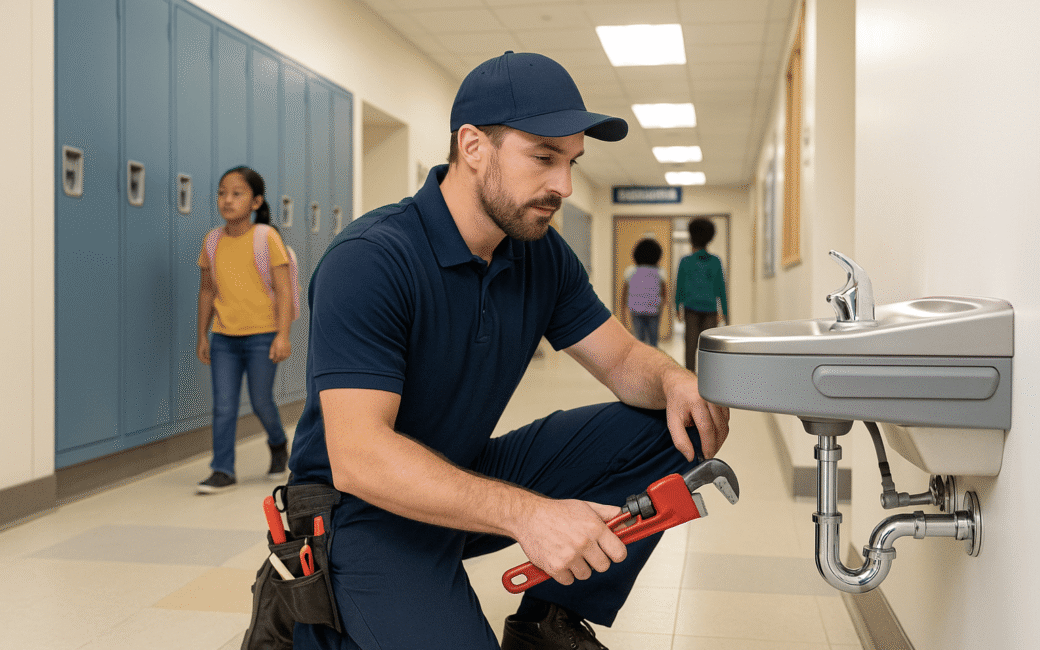
Water Fountain and Bottle-Fill Station Installation

Encouraging students to stay hydrated is important—but it also requires plumbing expertise. Plumbers handle:

  • Installing water fountains and sensor-based bottle-fill stations
  • Ensuring backflow prevention devices are working properly
  • Maintaining filters for safe drinking water
  • Connecting units to updated plumbing lines

Many Burnaby schools have moved toward eliminating plastic water bottles, and these modern hydration stations support that effort.

ALSO READ: Outdoor Education Programs in Vancouver

Leak Detection and Pipe Repairs

Leaks often start small but can cause major problems if left unchecked. Plumbers use specialized tools to locate and fix:

  • Leaks behind drywall or under floors
  • Damaged pipes in older school buildings
  • Leaky hose bibs and outdoor taps
  • Pipe corrosion or weakened seals in mechanical rooms

Proactive leak detection helps avoid water damage in school libraries, labs, and computer rooms.

Drain Cleaning and Backflow Prevention

School kitchens, science labs, and washrooms all rely on effective drainage. Common services include:

  • Clearing clogged toilets, floor drains, and sinks
  • Root removal from buried exterior drainage lines
  • Installation of backflow preventers to protect water quality
  • Regular flushing of rarely used plumbing lines

To prevent sewer backups and water contamination, routine maintenance is key.

Hot Water System Maintenance

Most schools in Burnaby rely on centralized water heating systems that need regular servicing. Plumbers help with:

  • Flushing and descaling water heaters or boilers
  • Replacing thermostats or heating elements
  • Adjusting water temperature for student safety
  • Checking for hot water circulation issues

If you’re upgrading to more efficient systems, our team offers commercial plumbing in Burnaby tailored to institutional needs.

Supporting New School Builds and Renovations

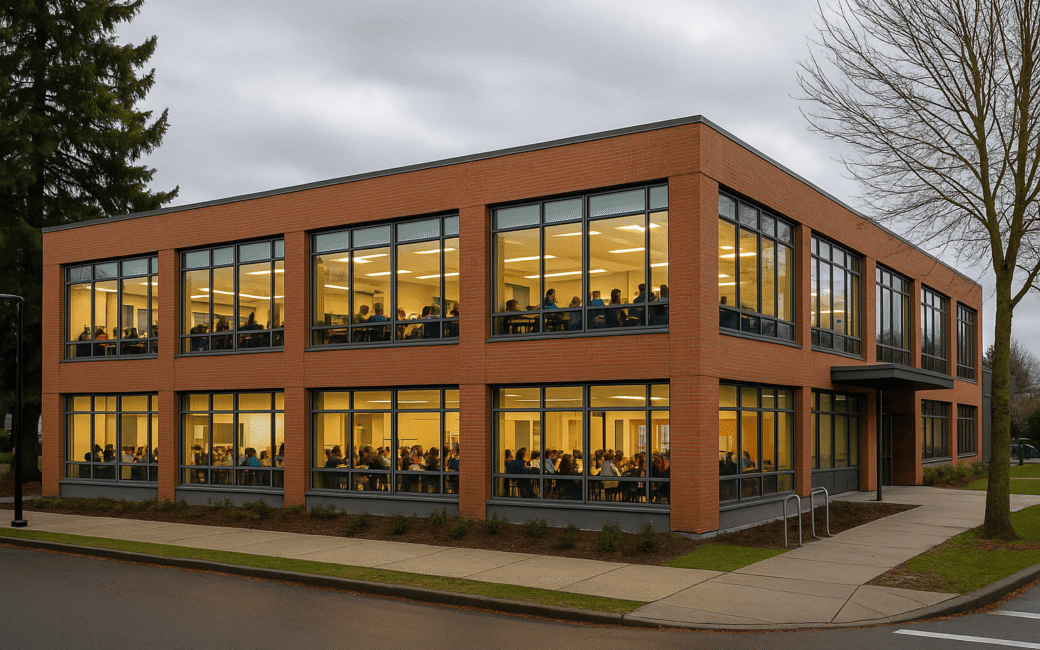
With Burnaby continuing to invest in new schools—like the rebuild of Burnaby North Secondary or the expansion of Stride Avenue Community School—plumbing plays an essential role in every construction phase.

Plumbers’ Role in New Construction:

  • Designing efficient water supply and waste systems
  • Installing high-efficiency fixtures for LEED-certified buildings
  • Ensuring compliance with the BC Plumbing Code
  • Coordinating with general contractors and school district planners

Having a skilled plumber in Burnaby, BC involved early in a school’s construction project helps avoid future issues and ensures the facility can handle decades of student use.

ALSO READ: A Comprehensive Guide to Education in BC

Emergency Plumbing Services for Schools

When a pipe bursts or a water main breaks, time is of the essence. Schools need plumbing partners who can act fast to minimize disruptions to the learning environment.

Common Emergencies:

  • Burst water pipes due to freezing temperatures
  • Overflowing toilets or sewage backups
  • Boiler breakdowns during cold months
  • Gas line leaks or odour reports

A local plumbing team that offers 24/7 emergency service can be a valuable asset for school districts in Burnaby, especially during evenings, weekends, or breaks when facilities are still in use.

Water Safety and System Testing in Schools

Maintaining water safety is not just about installing the right systems—it’s about ongoing testing and flushing protocols to prevent contaminants and bacterial buildup.

Important Plumbing Safety Measures:

TaskWhy It Matters in Burnaby Schools
Lead testingTo ensure drinking water is safe, especially in older buildings
Backflow prevention checksTo stop contaminants from re-entering the water system
Legionella risk managementIn buildings with large, complex hot water systems
Seasonal flushingAfter school holidays or long weekends to maintain water quality

Local plumbers support school boards in meeting provincial health and safety regulations, particularly after closures or renovations.

Choosing a Reliable Plumber in Burnaby, BC for School Work

Hiring the right plumbing partner can save schools time, money, and stress. Whether you’re overseeing one school or several across the district, here’s what to look for:

What Makes a Great School Plumbing Partner:

  • Experience with institutional buildings
    Plumbing a school is very different from working in a single-family home.
  • Licensed and bonded
    Must meet all provincial safety and insurance requirements.
  • Criminal record checks and certifications
    Especially important when working on school property during school hours.
  • Knowledge of local codes and school board policies
    Compliance with Burnaby School District maintenance protocols.
  • Commitment to safety and student-first scheduling
    Willing to work after-hours or during school breaks to minimize classroom disruption.

At Impetus Plumbing & Heating, we understand the expectations of working in school environments—cleanliness, discretion, and professionalism always come first.

Final Thoughts: Plumbing as a Silent Safety System

While teachers, principals, and caretakers may get most of the spotlight, plumbers are an essential part of what makes Burnaby’s schools run smoothly. From installing water-saving fixtures to ensuring clean drinking water and managing heating systems, the plumbing behind the walls quietly supports student health, safety, and success.

By investing in regular inspections, preventative maintenance, and trusted local professionals, schools in Burnaby can stay functional, efficient, and ready to serve their students every day of the year.

Need School Plumbing Support in Burnaby?

If you’re responsible for school facility maintenance or looking for a long-term plumbing partner for Burnaby School District projects, we’re here to help.

Visit our contact page to request a site assessment, or learn more about our plumbing services for commercial clients in Burnaby.

Open post

A Comprehensive Guide to Education in BC: Public vs. Private Schools

The education system in British Columbia (BC) offers a wide array of choices for students and parents. One of the crucial decisions that families face is choosing between public and private schools. In this comprehensive guide, we will delve into the key differences between these two options, including curriculum, funding, class sizes, and the application process. By the end of this article, you’ll have a better understanding of which type of school may be the best fit for your child’s educational journey in BC.


Public Schools in BC

Curriculum

Public schools in BC follow a standardized curriculum mandated by the BC Ministry of Education. This means that students across the province receive a consistent educational foundation. The curriculum covers a wide range of subjects, with a focus on core academic disciplines.

Funding

Public schools are primarily funded by the government through taxpayer dollars. This funding model ensures that public schools are accessible to all children in the province. However, it can also lead to budget constraints and limitations on resources and programs.

Class Sizes

Public schools in BC often have larger class sizes compared to private schools. This can result in higher student-teacher ratios, which may affect the level of individualized attention students receive.

Application Process

Enrolling in a public school in BC is typically based on geographic location. Students are assigned to schools within their catchment area, which is determined by their residential address. The application process is straightforward and involves registering with the local school district.


Private Schools in BC

Curriculum

Private schools in BC have more flexibility when it comes to curriculum. While they must meet certain educational standards set by the Ministry of Education, they often offer specialized programs and curricular options that cater to specific interests or teaching philosophies.

Funding

Private schools rely on a combination of tuition fees, donations, and grants to fund their operations. This financial independence allows them to invest in additional resources, extracurricular activities, and specialized programs.

Class Sizes

Private schools in BC are known for their smaller class sizes. This means that students in private schools often benefit from more personalized attention from teachers, potentially enhancing their learning experiences.

Application Process

The admission process for private schools varies but generally includes an application, an interview or assessment, and the payment of tuition fees. Some private schools also offer financial aid or scholarships to help families with the cost of tuition.


Comparing Public and Private Schools

Academic Performance

Academic performance can vary between public and private schools, but it’s important to note that there are high-achieving schools in both sectors. Factors influencing academic outcomes include teaching quality, resources, and student motivation.

Extracurricular Activities

Both public and private schools in BC offer extracurricular activities, but private schools may have a wider variety of options due to their financial resources. These activities play a crucial role in students’ personal development.

Diversity and Inclusion

Public schools tend to have more diverse student populations, reflecting the broader community. However, private schools are increasingly focused on fostering diversity and inclusion through various initiatives.

Support Services

Support services for students, such as counseling and special education programs, are available in both public and private schools. The accessibility and effectiveness of these services can vary between institutions.


Making the Right Choice

Factors to Consider

When deciding between public and private schools in BC, parents should consider their own values and preferences, as well as the needs and goals of their children. Each family’s situation is unique, so what works best for one may not be the ideal choice for another.

Tips for Parents

  • Conduct Research: Take the time to research schools in your area, both public and private.
  • Visit Schools: Attend open houses or tours to get a feel for the school’s environment and culture.

Conclusion

Choosing between public and private schools in BC is a significant decision that requires careful consideration. It’s essential to find the right fit for your child’s educational journey. By being informed and exploring your options, you can make the best choice for your family.


Additional Resources

For more information on schools in BC, you can visit the following websites:


Conclusion

In this comprehensive guide, we’ve explored the differences between public and private schools in British Columbia. Whether you prioritize standardized curriculum and accessibility or seek specialized programs and smaller class sizes, BC offers a diverse range of educational options. By considering your family’s unique needs and values, you can make an informed decision that sets your child on a path to success in their education.

Open post

Outdoor Education Programs in Vancouver: Harnessing Natural Wonders for Experiential Learning

Outdoor education is a hands-on, immersive method of learning that takes advantage of natural settings. Particularly in a place as geographically diverse as Vancouver, this approach not only makes education more engaging but also more meaningful. With mountains, forests, and the ocean right at its doorstep, Vancouver presents an unparalleled opportunity for schools to offer experiential learning programs that drive home the importance of environmental studies and sustainability.

Background

Nestled between the Coastal Mountain range and the Pacific Ocean, Vancouver boasts some of Canada’s most breathtaking landscapes. But its beauty isn’t just for show. Indigenous peoples, such as the Musqueam, Squamish, and Tsleil-Waututh Nations, have lived in harmony with this land for thousands of years. Their traditional knowledge and sustainable practices offer a rich history that can be integrated into today’s outdoor education.

Importance of Environmental Studies and Sustainability

As climate change and environmental degradation become ever more pressing, the need for informed, environmentally-conscious citizens has never been greater. While textbooks and documentaries provide valuable insights, there’s something profoundly transformative about observing an ecosystem firsthand. Experiential learning in the heart of nature can cultivate a deep-rooted respect and understanding of our environment.

Field Trips to Local Natural Sites

There’s no shortage of natural wonders in and around Vancouver:

  • Stanley Park: A vast urban oasis teeming with diverse plant and animal life.
  • Grouse Mountain: A perfect spot for studying mountainous ecosystems.
  • Pacific Spirit Park: A coastal rainforest experience close to the city.

Each of these locations can serve as an open-air classroom, where students can directly observe and interact with the elements of the ecosystem, from identifying species to understanding ecological interrelationships.

Beach Clean-Ups

Marine pollution, especially plastic waste, is a grave threat to our oceans and marine life. Organizing beach clean-ups offers a two-fold benefit: it helps protect marine environments while giving students a tangible sense of the impacts of human behavior. As they remove and categorize waste, students see firsthand the consequences of pollution and the importance of sustainable practices.

Educational Hikes

With a plethora of hiking trails suitable for all ages and fitness levels, Vancouver is a hiker’s paradise. But these trails offer more than just scenic beauty:

  • Nature-Guided Walks: Local experts can introduce students to the intricacies of botany, geology, or zoology, making hikes informative and engaging.
  • Observation Tasks: Assigning students to observe and note particular elements can enhance their observational skills and deepen their connection to nature.

Moreover, the act of hiking promotes physical health and offers the mental wellness benefits of nature therapy.

Integrating Outdoor Education into the School Curriculu

Implementing outdoor education poses its challenges – unpredictable weather, ensuring student safety, coordinating logistics, and sourcing funds. However, many of these challenges can be mitigated through meticulous planning and collaboration with local environmental bodies. In fact, several Vancouver schools have already successfully woven outdoor programs into their curriculum, serving as models for others.

Conclusion

In a rapidly urbanizing world, it’s easy for children to feel detached from nature. Vancouver, with its rich tapestry of natural wonders, has a golden opportunity. By integrating outdoor education into school programs, we can not only foster a better understanding of the environment but also cultivate a generation that values and acts for its preservation.

Open post
Tutoring in Langley

Get the Best Grades Possible With These Langley Tutoring Centers

Are you looking for a way to improve your grades? If so, you should consider using a tutoring center. Tutoring centers can help students of all ages and backgrounds learn in a more personalized setting. In this blog post, we will discuss how to find the best tutoring center in Langley and how to choose the right one for your needs. We will also dispel some myths about tutoring in Langley!

How to improve your grades with tutoring

If you want to improve your grades, tutoring can be an invaluable resource. Tutors can provide personalized instruction and help students develop better study habits that can be used on their own. They are also great at helping struggling students understand difficult concepts and providing one-on-one guidance.

Tutoring centers in Langley offer a variety of services, from academic tutoring and test prep to college counseling and career guidance. This means that you can find a tutoring center that meets your specific needs.

How to find the best tutoring center in Langley

Finding the right tutoring center in Langley can be a challenge. It is important to do your research and take several factors into consideration. Before making a decision, make sure the center offers experienced tutors who tailor their lessons to the individual student’s needs. Additionally, look into the success stories of previous students that have worked with the center. Finally, it is important to find out what kind of guarantee the tutoring center offers to ensure that your child receives quality service. With all of these factors taken into account, you will be better prepared when it comes time to choose a tutoring center for your child in Langley.

How to choose the right tutoring center in Langley

When it comes to choosing a tutoring center in Langley, there are several key factors to consider. First and foremost, make sure the center has experienced and knowledgeable instructors. It is important for students to feel safe and welcomed in an educational environment such as a tutoring center. Second, evaluate their facility; does the site look organized and well maintained? Having functional textbooks and technology should also be taken into account when deciding which tutoring center is right for you. Another essential factor is cost; make sure the services provided fit in your budget. Lastly, determine what type of methodologies they use; the program should not only be effective but also engaging. With these five criteria in mind, you can easily find a reliable tutoring center that will best fit your individual learning needs.

Tutoring in Langley: Myth vs. Fact

There are many misconceptions about tutoring in Langley, but the truth is that tutors can be extremely beneficial for improving grades and academic success. Tutoring centers have experienced teachers who use proven methods to help students learn better, and faster. With the right guidance and support, any student can improve their grades with the help of a tutoring center.

Tutoring hacks for turning a ‘C’ student into an ‘A’ student

Tutoring is a great resource for turning a ‘C’ student into an ‘A’ student. A tutor can help identify the struggles that are causing low grades and work on them together, leading to drastic improvements in grades. While the immediate goal should always be understanding the subject matter at hand, tutors also have some great tips for lasting success in their field. Breaking material down into small sections and focusing on mastering one concept at a time can help build a solid foundation of knowledge that empowers students to tackle more difficult aspects of any given subject. Additionally, quizzing yourself on specific topics or reviewing notes regularly can help further cement concepts in memory before test day arrives. As with any goal, having consistent and ongoing motivation is essential to achieve high grades. Using rewards as small incentives along the way can keep students engaged and motivated throughout their schooling journey and foster excellent study habits as well!

We hope this blog post has helped you understand how to improve your grades with tutoring and find the best tutoring center in Langley for your needs. With the right help, you can get the best grades possible! Good luck!

Open post

Benefits of Choosing a Public School in Canada: Things You Didn’t Know

If you’re a parent in Canada, chances are you’re wondering whether or not you should send your child to public school. There are many benefits of choosing a public school, but there are also some things you may not know about them. In this blog post, our partner Surrey tutor will discuss the benefits of sending your child to a public school in Canada. We will also cover 10 things you may not have known about basic education in Canada, and how to pick the right school for your family.

The benefits of basic school education in Canada

The benefits of basic school education in Canada are numerous. Here are five of the most important ones:

Your child will receive a well-rounded education. Public schools in Canada offer a wide variety of courses, from the arts to sciences and everything in between. This means that your child will be exposed to a variety of subjects, and will be able to find their niche.

Public schools are funded by the government. This means that they are held to high standards, and must meet certain educational requirements.

Your child will make friends from all walks of life. One of the great things about public schools is the diversity of the student body. Your child will learn to appreciate different cultures and backgrounds, and will develop friendships that they may never have otherwise.

The teachers in public schools are highly qualified. In order to teach in a public school, teachers must have a bachelor’s degree in education and must be certified by the province. This ensures that your child will be receiving a high-quality education from experienced professionals.

Your child will learn how to function in a society. In public school, your child will learn how to interact with their peers, and how to function in a larger society. This is an important skill that they will use throughout their life.

Picking the right school for your family

When it comes to choosing a public school for your family, there are a few things you should keep in mind. Here are some tips:

Research the schools in your area. Talk to other parents, and see what their experiences have been.

Visit the schools you’re considering. This will give you a good feel for the environment, and will allow you to meet the teachers and staff.

Consider your child’s needs. Every child is different, and each one will thrive in a different type of environment. Consider your child’s personality, learning style, and any special needs they may have.

Choose a school that you feel comfortable with. This is ultimately your decision, and you should go with your gut feeling.

5 benefits of choosing a public school in Canada

In Canada, parents have the choice of sending their children to either public or private school. While private schools may have some advantages, there are also many reasons to choose a public school.

  1. First of all, public schools are significantly less expensive than private schools. This is especially important for families with multiple children, as the cost of private schooling can add up quickly.
  2. Additionally, public schools are required to follow the provincial curriculum, which means that students will receive a well-rounded education.
  3. Another benefit of public schools is that they typically have smaller class sizes, which allows for more individualized attention from teachers.
  4. Finally, public schools are more inclusive than private schools and offer a wider range of extracurricular activities and programs.
  5. As a result, choosing a public school can be a great way to save money, ensure a high-quality education, and give your child opportunities to explore their interests.

Do you have any tips for choosing a public school? Let us know in the comments below!

10 things you didn’t know about basic school in Canada

  1. Elementary school in Canada is mandatory and free for all children between the ages of 6-16
  2. There are no tuition fees, but parents are responsible for purchasing textbooks and other classroom materials
  3. The school year runs from September to June, with a summer break in July and August
  4. Students attend school for either half or full days, depending on their grade level
  5. Elementary schools offer a variety of programs, including English as a Second Language (ESL), special education, and gifted and talented classes
  6. There are no uniforms in Canada’s basic schools
  7. Students are not required to learn a second language
  8. The school year is only 9 months long
  9. Basic education is free for all students
  10. Students can start grade 1 at the age of 4 or 5
  11. There are no school buses, so students must walk or bike to school
Open post

How to Pick the Right Primary School for Your Child

When it comes to enrolling your child in primary school, there are a lot of things to think about. What is the best school for them? What will they learn? How can I make sure they enjoy learning? These are all valid questions, and we’re here to help you answer them! In this blog post, we’ll be discussing seven ways that you can help your child love learning and pick the right primary school for them. We’ll also be giving you some tips from teachers on how to make primary school subjects more fun for your kids. So read on and get started on helping your little one have a successful educational journey!

How to pick the right primary school for your child

There are a few things to keep in mind when enrolling your child in primary school. You want to make sure that the school is accredited, has experienced teachers, and offers a curriculum that matches your child’s learning style. You also want to visit the school and meet with the principal to get a feel for the environment and see if it’s a good fit for your family.

What primary school teachers wish parents knew

There are a few things that primary school teachers wish parents knew. One is that every child learns differently, so it’s important to find a school that matches your child’s learning style. Another is that homework isn’t always necessary, and sometimes it’s actually counterproductive. Finally, teachers wish that parents would trust them to do their jobs and support them instead of second-guessing everything they do.

Seven ways to help your child love learning

As any parent knows, raising a happy and successful child is no easy task. One of the most important things you can do is to help your child love learning. Here are seven ways to get started:

1. Encourage curiosity. Help your child explore the world around them and ask questions about the things they see and hear.

2. Promote a love of reading. Read aloud to your child, take them to the library, and let them see you reading for pleasure.

3. Foster a growth mindset. Help your child understand that intelligence is not fixed, and that everyone has the ability to learn and grow.

4. Emphasize effort over innate ability. Praise your child for their hard work and perseverance, rather than focusing on natural talent or gifts.

5. Encourage exploration and experimentation. Create opportunities for your child to try new things, make mistakes, and discover their own interests and passions.

6. Be patient and supportive. Learning can be frustrating at times, but it’s important to remember that everyone learns at their own pace. Be Patient and offer encouragement when your child is struggling.

7. Model lifelong learning yourself!

The benefits of enrolling your child in primary school

Enrolling your child in primary school can have many benefits. It can help them to develop socially, emotionally, and academically. They will make friends, learn to share, and begin to understand how to resolve conflicts. They will also start to learn about cooperation and teamwork. In addition, they will begin to develop their reading, writing, and numeracy skills.

Primary school can also provide a safe and structured environment for your child to explore their interests and talents. They will have opportunities to try new things, participate in extracurricular activities, and make new friends. All of these experiences can help your child to develop into a well-rounded individual. So, if you are considering primary school for your child, be sure to weigh all of the potential benefits.

How you can make learning primary school subjects more fun for your kids

There are a few ways that you can make learning primary school subjects more fun for your kids. One way is to find a school that offers a curriculum that they’re interested in. Another way is to make sure that they have plenty of time to play and explore. Additionally, you can help them by making learning more hands-on and by encouraging them to ask questions. Finally, you can make learning more fun for your kids by showing them that you value education yourself.

We hope that this blog post has helped you answer some of the questions you have about enrolling your child in primary school. Remember, the most important thing is to find a school that matches their learning style and to make sure that they have a positive attitude towards learning. With your support, they’ll be on their way to a successful educational journey!

If you have any questions or would like more information, please don’t hesitate to contact us. We’re always happy to help!

What primary school teachers wish parents knew

7 Ways to Help Your Child Love Learning

The benefits of enrolling your child in primary school

How you can make learning primary school subjects more fun for your kids

Posts navigation

1 2
Scroll to top