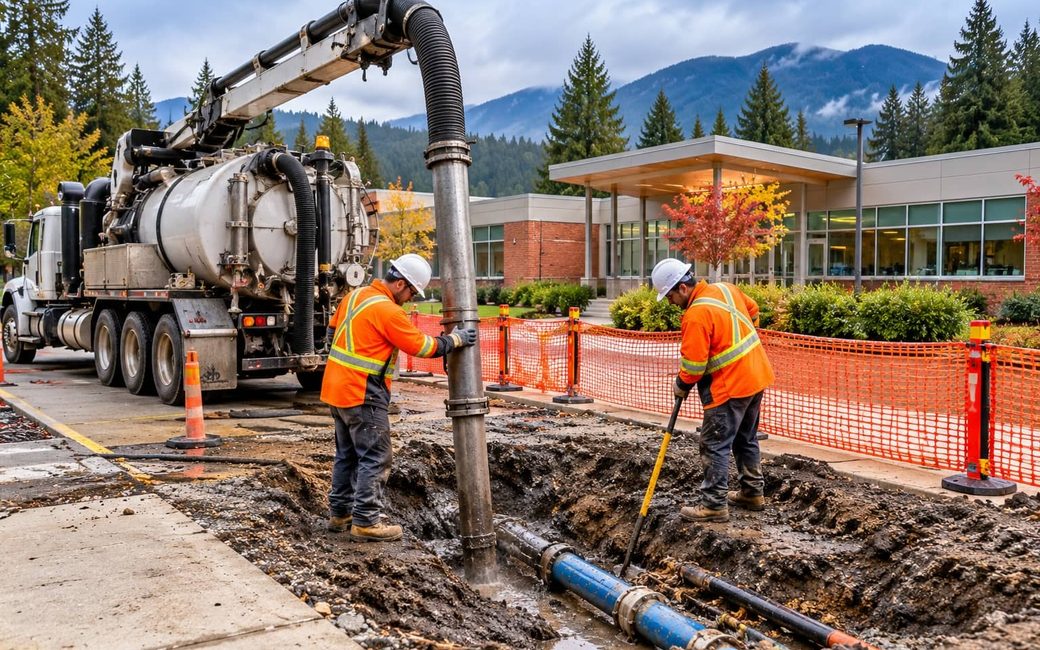
School construction projects involve much more than building classrooms, renovating hallways, or upgrading playgrounds. Beneath every school property lies a complex network of water pipes, electrical cables, gas lines, and communication systems that must be protected during construction. In growing communities like Coquitlam, hydro excavation services in Coquitlam are helping contractors expose underground utilities with greater precision, reduce accidental damage, and improve safety during school renovations and infrastructure upgrades.
From established school neighbourhoods in Maillardville to newer residential developments around Burke Mountain, construction teams must carefully plan underground work before breaking ground.
Traditional excavation equipment remains essential for many projects. However, digging near buried infrastructure creates risks that require special attention. Accidentally striking a gas line, electrical cable, or water main can cause expensive repairs, dangerous conditions, and unexpected construction delays.
Modern technologies, including hydro excavation, underground utility locating, and digital mapping, help construction teams better understand what lies beneath school grounds.
These improvements support safer construction practices and help school districts protect the buildings and infrastructure that students and teachers depend on every day.
Why Excavation Safety Matters During School Construction Projects
School grounds may look relatively simple from the surface. A typical campus includes classrooms, playgrounds, parking lots, sports fields, sidewalks, and landscaped areas.
However, the underground infrastructure supporting these facilities can be surprisingly complicated.
Before contractors begin digging, they need to understand where buried utilities are located and how construction activities could affect them.
The Hidden Infrastructure Beneath School Grounds
Schools require several underground systems to operate safely and efficiently.
These systems may include:
- Electrical cables: Supply electricity to classrooms, lighting, equipment, and other building systems.
- Water supply lines: Provide water for washrooms, drinking fountains, cafeterias, and fire protection systems.
- Natural gas pipes: Supply gas to certain heating systems and other equipment.
- Sanitary sewer lines: Carry wastewater away from school buildings.
- Stormwater drainage systems: Help manage rainwater around playgrounds, parking lots, and buildings.
- Communication cables: Support internet connections, telephones, and school technology.
- Irrigation pipes: Supply water to landscaped areas and athletic fields.
Some older school properties may have undergone several renovations over the decades. Underground infrastructure may have been relocated, extended, or replaced during those projects.
As a result, existing utility drawings may not reflect every change made beneath the property.
Before excavation begins, construction teams must verify utility locations rather than relying entirely on historical plans.
Risks Associated With Excavation Near Schools
Excavation creates hazards on almost any construction site, but school properties require additional precautions because children, teachers, and visitors may be nearby.
Accidentally damaging underground infrastructure can cause several problems.
A broken water main could interrupt washroom access and building operations. Damaged electrical infrastructure could create serious safety hazards. A gas line strike could require emergency response and evacuation.
Other consequences may include:
- Unexpected construction delays.
- Expensive utility repairs.
- Damage to nearby buildings or pavement.
- Restricted access to school entrances.
- Interruptions to communication systems.
- Additional restoration work.
Schools also need secure construction zones to prevent unauthorized access to excavation areas.
Modern excavation methods help reduce certain risks, but they must be combined with proper planning, trained workers, and appropriate safety procedures.
What Is Hydro Excavation and How Does It Work?
Hydro excavation is a method of removing soil using pressurized water and a powerful vacuum system.
Instead of relying entirely on a mechanical excavator bucket or shovel, operators direct a controlled stream of water toward the ground.
The water loosens the soil, while the vacuum system removes the resulting mixture of water and excavated material.
This process is commonly called hydrovac excavation.
Understanding Hydro Excavation Equipment
A hydro excavation truck typically contains several important components.
Water pressure system: Delivers pressurized water through a specialized hose and nozzle to loosen soil.
Vacuum system: Removes loosened soil, water, and debris from the excavation area.
Debris tank: Stores excavated material until it can be transported for appropriate disposal.
Boom and hoses: Allow operators to access specific excavation locations without positioning the entire truck directly beside the opening.
Operator controls: Help trained workers manage water flow, pressure, and vacuum equipment.
Hydro excavation is particularly useful when construction crews need to expose buried utilities or create relatively small, precise excavations.
However, the technique is not automatically safe for every utility. Incorrect water pressure, unsuitable equipment, or poor operating practices can still cause damage.
Step-by-Step Hydro Excavation Process
Although procedures vary by project, the general process involves several stages.
- Site assessment: Contractors inspect the work area, review project plans, and identify potential hazards.
- Utility locating: Underground services are identified using available records and appropriate locating methods.
- Site preparation: Workers establish safety barriers and position equipment.
- Controlled excavation: Pressurized water loosens soil in the designated excavation area.
- Vacuum removal: The vacuum system removes the soil and water mixture.
- Utility exposure: Buried pipes or cables become visible, allowing contractors to verify their location.
- Inspection or construction: Qualified workers complete the required installation, repair, or investigation.
- Site restoration: The excavation is backfilled and restored according to project specifications.
This controlled process is particularly valuable when contractors need to work around infrastructure that must remain operational.
How Hydro Excavation Helps Protect Underground Utilities
Protecting buried infrastructure is one of the main reasons contractors choose hydro excavation.
When a school renovation requires underground work, construction teams must locate existing utilities before installing new pipes, foundations, or electrical infrastructure.
Reducing Accidental Utility Strikes
Traditional excavators use metal buckets or digging attachments to remove soil.
These machines are highly effective for large excavation projects, but their mechanical force can create problems when buried infrastructure is nearby.
A bucket tooth can damage a pipe or cable if its exact location is unknown.
Hydro excavation offers a more controlled approach by using water to loosen soil around sensitive infrastructure.
This reduces direct contact with mechanical excavation equipment.
For example, contractors installing new electrical infrastructure at a school may need to cross an existing water line.
Exposing the water line before further excavation allows workers to identify its location and adjust their construction approach.
Although hydro excavation can reduce the likelihood of accidental damage, appropriate water pressure, safe distances, and utility-specific procedures remain essential.
Utility Daylighting and Potholing
Two important applications of hydro excavation are utility daylighting and potholing.
Utility daylighting involves exposing a buried utility so contractors can visually confirm its position and depth.
Potholing involves creating a small, targeted excavation opening to investigate underground conditions.
These techniques are especially useful when underground utility records are incomplete or uncertain.
For example, a construction team preparing to install a new water service line may need to confirm the location of an existing electrical conduit.
Rather than excavating a large section of ground, workers can create a small opening to expose the utility.
This helps engineers and contractors plan the remaining work with better information.
Professional hydro excavation services can support daylighting, potholing, controlled trenching, and excavation around sensitive underground infrastructure. Lo-Vac Solutions
Working Around Sensitive Infrastructure
School renovation projects often involve several utilities occupying limited underground space.
Hydro excavation may be used to investigate areas containing:
- Electrical distribution cables.
- Fibre-optic communication lines.
- Water mains and service connections.
- Natural gas distribution pipes.
- Sewer connections.
- Stormwater drainage pipes.
Utility owners may have specific requirements for exposing their infrastructure.
Contractors must follow those requirements and establish appropriate safety procedures before working near buried services.
Modern Excavation Technologies Used in School Construction
Hydro excavation is only one part of modern underground construction.
Several other technologies help contractors investigate a site and plan excavation work more accurately.
Ground Penetrating Radar
Ground penetrating radar, or GPR, uses electromagnetic signals to detect certain buried objects and changes in underground materials.
Surveyors may use this technology to identify possible utility locations or investigate subsurface conditions.
GPR can be useful when existing drawings are incomplete.
However, its effectiveness depends on soil conditions, ground moisture, utility depth, and the materials being detected.
In areas with difficult soil conditions, additional investigation may be necessary.
Electromagnetic Utility Locating
Electromagnetic locating equipment helps identify certain conductive underground utilities.
This technology can be useful for tracing metallic pipes and suitable electrical infrastructure.
Contractors may combine electromagnetic locating with existing utility records and other investigation techniques.
No single locating method can reliably detect every buried object.
That is why physical verification may still be required before excavation proceeds near sensitive infrastructure.
Digital Mapping and Construction Planning
Modern construction projects increasingly rely on digital information.
Geographic information systems, digital site plans, and building information modelling can help organize utility records.
These technologies allow project teams to document underground conditions and share information with engineers, contractors, and facility managers.
Accurate records are particularly valuable for school districts responsible for maintaining multiple properties.
When utilities are exposed during construction, their verified locations can be recorded for future projects.
This helps reduce uncertainty when the next renovation takes place.
Key Benefits of Hydro Excavation for School Construction Projects
Hydro excavation offers several advantages when used in appropriate conditions.
For school construction projects, these benefits often relate to protecting existing infrastructure and reducing unnecessary ground disturbance.
Improved Safety for Workers and School Communities
Excavation safety begins with identifying hazards and selecting suitable construction methods.
By reducing direct mechanical contact with buried utilities, hydro excavation can lower certain risks associated with traditional digging.
This is particularly important when working near gas lines, electrical cables, or other sensitive services.
However, hydro excavation equipment introduces its own hazards, including pressurized water, moving machinery, and vacuum equipment.
Trained operators, proper equipment settings, and secure construction zones remain necessary.
Greater Precision Around Existing Structures
School grounds often contain sidewalks, landscaping, playgrounds, building entrances, and underground infrastructure close together.
Large excavation openings may require extensive removal of pavement or landscaping.
Hydro excavation can help contractors access smaller areas without disturbing as much surrounding ground.
For example, exposing a utility connection near a school entrance may require only a targeted opening rather than removing a large section of pavement.
The amount of disturbance depends on site conditions and the work being completed.
Reduced Risk of Expensive Repairs
Damaging underground infrastructure can significantly increase project costs.
A broken water line may require emergency repairs, temporary service interruptions, and restoration of affected surfaces.
Electrical or communication cable damage may require specialized repairs and additional testing.
By identifying and exposing utilities before major excavation, contractors can reduce uncertainty and avoid some unexpected expenses.
This supports better financial planning for school districts managing construction budgets.
Less Disruption to School Activities
School construction can affect everyday routines.
Students need safe access to classrooms and playgrounds. Teachers need functional learning environments. Parents need reliable pickup and drop-off areas.
Targeted excavation can sometimes reduce the space needed for underground investigations.
However, hydrovac trucks still require parking, equipment access, noise management, and appropriate safety barriers.
Careful scheduling remains essential, especially when work takes place during the school year.
Common School Construction Projects That Benefit From Hydro Excavation
Hydro excavation can support a wide range of school infrastructure improvements.
Underground Water Line Repairs and Replacement
Reliable water infrastructure is essential for school operations.
Water lines supply washrooms, drinking fountains, cafeterias, and building systems.
When an underground pipe develops a leak or requires replacement, contractors may need to expose it before completing repairs.
Hydro excavation can help locate the affected pipe while reducing unnecessary disturbance around nearby utilities.
This is particularly useful when several service lines occupy the same underground corridor.
Electrical and Telecommunications Upgrades
Modern classrooms depend heavily on electricity and digital connectivity.
Schools use computers, interactive displays, security equipment, communication systems, and specialized learning technology.
Older buildings may require upgrades to underground electrical connections or telecommunications infrastructure.
Before installing new conduits, construction teams must identify existing buried cables.
Precise excavation can support these investigations and reduce the risk of interrupting essential services.
Stormwater Drainage Improvements
Anyone familiar with Coquitlam knows that heavy rainfall is a regular part of life in the Lower Mainland.
Schools need effective drainage systems to protect buildings, walkways, playgrounds, and parking areas.
Blocked or damaged stormwater pipes can contribute to standing water and localized flooding.
When underground drainage connections need investigation, hydro excavation may help expose pipes and identify existing infrastructure.
Proper drainage planning is especially important around sloped properties where rainwater can move quickly across paved surfaces.
School Building Expansions
Growing communities may require additional classrooms, upgraded facilities, or changes to existing school layouts.
Areas around Burke Mountain and other developing neighbourhoods illustrate why long-term infrastructure planning matters.
Before construction begins, contractors must identify utilities that could conflict with new foundations, service connections, or building additions.
Hydro excavation can help expose those utilities so engineers can adjust their plans when necessary.
School infrastructure planning should also consider future enrollment, building conditions, and funding priorities. The article How School Bond Planning Helps Build Better Learning Environments explores how long-term investment decisions can support educational facilities, using Texas school districts as an example.
Playground and Outdoor Facility Upgrades
Playgrounds, sports fields, and outdoor learning areas may also require excavation.
Projects could involve installing lighting, drainage, irrigation systems, or new equipment foundations.
Before digging, contractors should confirm whether buried utilities pass through the work area.
Targeted excavation can help investigate underground conditions while limiting disturbance to surrounding surfaces.
Hydro Excavation vs. Traditional Mechanical Excavation
Hydro excavation and traditional mechanical excavation both have important roles in construction.
The best choice depends on the size of the project, underground conditions, existing utilities, and site access.
| Feature | Hydro Excavation | Traditional Mechanical Excavation |
|---|---|---|
| Excavation method | Pressurized water and vacuum removal | Excavators, backhoes, and mechanical tools |
| Precision | Suitable for small, targeted excavations | Effective for larger excavation areas |
| Underground utilities | Reduces direct mechanical contact when properly operated | Requires additional precautions near utilities |
| Ground disturbance | Can limit disturbance in suitable conditions | May require larger excavation openings |
| Speed | Efficient for daylighting and potholing | Often faster for large-scale soil removal |
| Equipment | Hydrovac truck and vacuum system | Excavators and other earthmoving machinery |
| Common applications | Utility exposure, potholing, sensitive excavations | Foundations, bulk excavation, large trenches |
For example, building a new school foundation typically requires substantial soil removal.
Mechanical excavators are generally better suited to that work.
However, if the excavation area crosses existing underground services, contractors may use hydro excavation first to identify and expose those utilities.
Using both approaches can provide an effective balance of safety, precision, and productivity.
How Hydro Excavation Can Reduce Disruptions During the School Year
Construction projects do not always happen when school buildings are empty.
Emergency repairs, utility improvements, and essential maintenance may need to occur during regular school operations.
Working Around Occupied School Buildings
Construction teams must separate equipment and excavation areas from students, teachers, and visitors.
Appropriate safety measures may include:
- Secure fencing around excavation areas.
- Designated pedestrian routes.
- Controlled construction vehicle access.
- Clear emergency access routes.
- Coordination with school administrators.
- Regular inspections of temporary barriers.
Where possible, work should be planned around busy arrival and dismissal periods.
The goal is to protect students while allowing necessary construction activities to continue safely.
Scheduling Work During School Breaks
Summer holidays provide an opportunity to complete construction work with fewer students on campus.
School districts may use these periods for building additions, water line replacements, playground upgrades, and electrical improvements.
However, summer construction schedules can be tight.
Unexpected underground utilities can create delays that affect several stages of a project.
Completing utility investigations and daylighting before major construction begins can help identify potential conflicts early.
This gives project teams more time to adjust designs and coordinate required work.
Communication With Parents and School Communities
Construction planning should include communication with families and school staff.
Parents may need information about temporary entrance changes, parking restrictions, or modified pickup locations.
School administrators should also understand construction schedules and potential interruptions.
For families interested in participating in school improvement discussions, OurSchool.ca provides a broader connection to school communities, parent engagement, and educational topics.
Clear communication helps reduce confusion when construction activities affect daily routines.
Excavation Safety Requirements for School Projects in British Columbia
Excavation work in British Columbia must follow applicable safety requirements.
School construction projects may involve additional rules established by the school district, utility owners, municipalities, and other authorities.
Locating Underground Utilities Before Digging
Before excavation begins, contractors should request appropriate underground utility information.
In British Columbia, BC 1 Call provides a notification service connecting excavators with participating underground utility owners.
However, not every buried service is necessarily covered.
Privately owned utilities, including certain services located within school grounds, may require separate investigation.
Contractors should review available records, obtain required locates, and verify utility locations using appropriate procedures.
Following WorkSafeBC Requirements
WorkSafeBC regulates occupational health and safety requirements for construction activities in British Columbia.
Excavation work may require specific measures involving:
- Ground stability and excavation support.
- Safe access and exit routes.
- Underground utility protection.
- Equipment operation.
- Hazard assessments.
- Worker training and supervision.
- Protection from falling materials and other site hazards.
Requirements vary depending on excavation depth, soil conditions, nearby structures, and other factors.
Contractors should review the applicable WorkSafeBC rules before beginning work.
Securing Construction Areas
Schools require special attention to pedestrian safety because children may be near construction activities.
Excavation openings should be properly secured.
Construction equipment should not interfere with emergency exits or designated evacuation routes.
School administrators and contractors should also coordinate safe vehicle movement and maintain clear separation between construction operations and occupied school areas.
How to Choose the Right Excavation Method for a School Project
Hydro excavation is useful, but it is not necessary for every construction task.
Before selecting an excavation method, project teams should assess several important factors.
Underground utility locations: Are electrical cables, water pipes, or gas lines near the excavation area?
Project size: Does the work involve exposing one underground connection or removing large quantities of soil?
Ground conditions: Will soil composition, groundwater, or buried obstructions affect the excavation process?
Equipment access: Can a hydrovac truck safely reach the location, and is there enough space for the necessary hoses and equipment?
Safety considerations: What precautions are required to protect workers, students, and nearby infrastructure?
Environmental responsibilities: How will excavated slurry, water, and other materials be handled and disposed of?
Project budget: Which approach provides appropriate safety and efficiency for the required work?
Restoration needs: How much pavement, landscaping, or playground surfacing will need replacement after excavation?
For larger projects, contractors may combine traditional mechanical excavation with targeted hydro excavation.
The appropriate method should be selected through a site-specific assessment.
The Future of Excavation Technology in Canadian School Construction
Construction technology continues to improve as contractors adopt better equipment, digital tools, and planning methods.
These developments may help school districts complete infrastructure upgrades more effectively.
Better Underground Utility Mapping
Accurate underground utility information becomes more valuable as school properties undergo repeated renovations.
Digital records can help facility managers understand where pipes and cables are located.
When contractors expose previously undocumented infrastructure, they can record verified positions for future reference.
This can help reduce uncertainty during subsequent projects.
Improved Hydrovac Equipment
Modern hydro excavation equipment continues to develop through improvements in water delivery systems, vacuum performance, and operator controls.
These features may support more efficient excavation in suitable conditions.
However, operator experience and proper procedures remain essential regardless of equipment sophistication.
More Responsible Construction Practices
Reducing unnecessary ground disturbance can help protect existing landscaping, pavement, and infrastructure.
Targeted excavation may also reduce certain restoration requirements.
At the same time, hydro excavation consumes water and produces slurry that requires proper handling.
The environmental impact depends on equipment, project conditions, transport requirements, and disposal practices.
Responsible construction planning should consider the entire process rather than treating any single excavation method as automatically sustainable.
Frequently Asked Questions About Hydro Excavation for Schools
Is Hydro Excavation Safer Than Traditional Digging?
Hydro excavation can reduce certain risks associated with mechanical digging, particularly when exposing underground utilities.
Because the process uses controlled water excavation instead of direct mechanical force, it can help reduce accidental strikes.
However, improper operation can still damage infrastructure. Trained workers, suitable pressure settings, and appropriate utility locating remain necessary.
Can Hydro Excavation Be Used Near Underground Electrical Cables?
Yes, hydro excavation may be used near certain underground electrical systems when approved procedures and appropriate precautions are followed.
The exact requirements depend on the utility, its condition, and the relevant utility owner’s instructions.
Workers must never assume that water excavation is automatically safe around energized infrastructure.
Does Hydro Excavation Damage School Landscaping?
Hydro excavation can reduce unnecessary ground disturbance by creating targeted openings.
This may help preserve surrounding pavement, landscaping, and other surfaces.
However, truck access, excavation requirements, and restoration activities can still affect the site.
Can Hydro Excavation Be Performed While School Is in Session?
Some hydro excavation projects can take place while a school remains occupied.
However, the work requires suitable site controls, equipment access, safety barriers, and coordination with school administrators.
Projects that create significant noise or restrict important access routes may be better scheduled outside regular school hours.
What Is Utility Daylighting?
Utility daylighting is the process of carefully exposing buried infrastructure to confirm its location, depth, and condition.
It helps contractors identify underground services before larger excavation or construction activities begin.
Is Hydro Excavation Suitable for Every Type of Soil?
Not necessarily.
Hydro excavation performance depends on soil composition, groundwater conditions, buried materials, and other site factors.
Some compacted or obstructed ground conditions may require alternative methods or additional equipment.
A qualified contractor can determine whether hydro excavation is suitable for a particular project.
Why Is Hydro Excavation Useful for School Renovations in Coquitlam?
Coquitlam school properties may contain underground utilities installed during different periods of construction and renovation.
Hydro excavation can help contractors expose these services before completing water line upgrades, drainage repairs, electrical improvements, or building expansions.
This supports safer project planning while helping protect existing infrastructure.
Conclusion: Building Safer Schools Starts Below the Ground
Safe school construction begins long before new classrooms are built or playground improvements are completed.
Understanding underground conditions is an essential part of protecting students, workers, school buildings, and critical infrastructure.
Modern technologies such as hydro excavation, utility locating, and digital mapping help construction teams make better decisions before digging.
For school renovation projects in Coquitlam, Port Coquitlam, Port Moody, and surrounding Lower Mainland communities, these methods can support more accurate utility investigations and reduce the likelihood of unexpected infrastructure damage.
Hydro excavation is particularly valuable when contractors need to expose buried services in confined or sensitive areas.
Combined with proper planning, qualified workers, and established safety procedures, it can help school districts complete necessary infrastructure improvements while minimizing avoidable disruptions.
A safe learning environment depends on more than what students and teachers can see inside the classroom. It also depends on the underground systems that keep school buildings functioning every day.