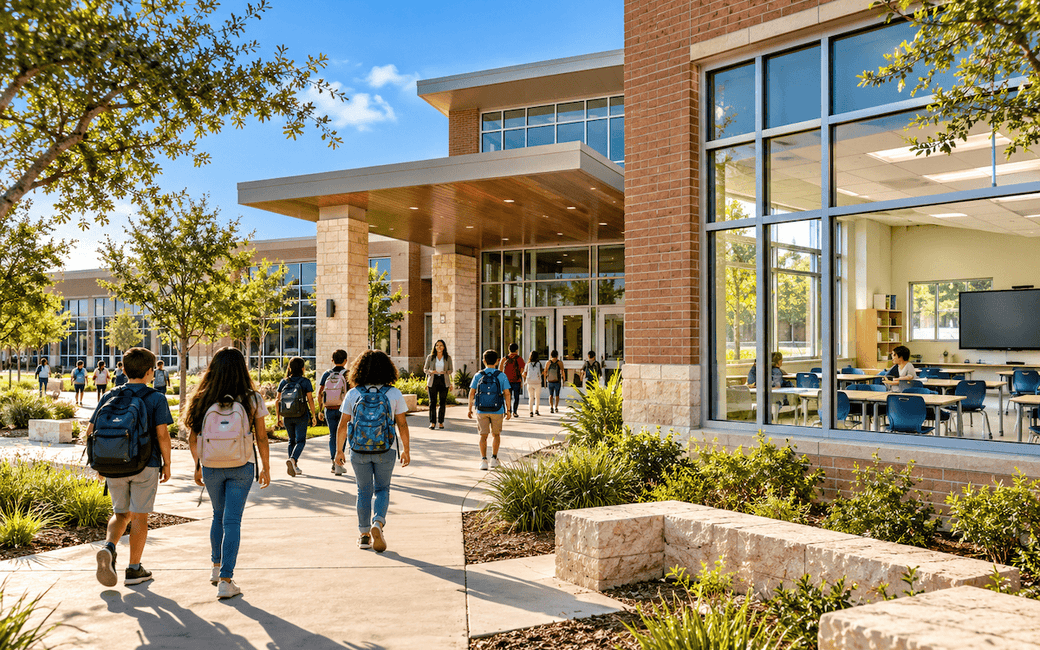
A school is more than a building with classrooms, hallways, and desks. It’s where children build friendships, discover their interests, and prepare for the future. Across the Lone Star State, Texas school bond planning helps public school districts address aging facilities, improve campus safety, and create modern learning spaces. By carefully planning how to fund major improvements, districts can make decisions that benefit students, teachers, and local communities for years to come.
From growing communities around Austin and Dallas-Fort Worth to smaller rural districts across Central Texas, schools face different challenges. Some need more classrooms to handle rising enrollment. Others need new heating and cooling systems, updated technology, or major repairs.
These improvements require significant investment. With thoughtful planning and community involvement, school districts can identify their most important needs and develop realistic plans to address them.
What Is School Bond Planning?
School bond planning is the process of identifying, evaluating, and budgeting for major school facility improvements that may be funded through bonds.
In Texas, school districts can issue bonds to borrow money for eligible capital projects, such as constructing new schools, renovating existing buildings, and improving infrastructure. Most school bond programs require voter approval before the district can issue the proposed bonds.
Unlike everyday school operating funds, bond proceeds are generally used for authorized long-term capital expenses rather than regular teacher salaries or routine operational costs.
School bonds are typically repaid over time using property tax revenue collected for debt service. This allows districts to spread the cost of major investments over several years instead of paying for everything at once.
However, proposing a bond involves much more than estimating construction expenses. School leaders must understand what their buildings need, determine which improvements matter most, assess financial capacity, and communicate clearly with taxpayers.
How School Bonds Help Fund Facility Improvements
Depending on the district’s needs and applicable funding rules, school bond programs may support:
- New school construction: Building campuses to accommodate growing student populations.
- Classroom renovations: Updating older learning spaces with modern equipment and improved layouts.
- Safety improvements: Installing secure entrances, emergency communication systems, and other approved safety features.
- Infrastructure upgrades: Replacing aging heating, cooling, electrical, plumbing, and roofing systems.
- Technology improvements: Updating eligible networking infrastructure and classroom technology.
- Accessibility upgrades: Improving entrances, restrooms, hallways, and other facilities.
- Athletic and performing arts facilities: Improving spaces that support extracurricular programs and community activities.
The exact projects must meet Texas legal requirements and any restrictions associated with the approved bond.
Why Long-Term Planning Matters
Without a clear plan, school districts risk spending money on improvements that fail to address their most important problems.
For example, replacing classroom furniture might make an older building look more appealing. However, those improvements will have limited value if the same building has serious ventilation problems or an outdated electrical system.
Effective school bond planning helps Texas school districts evaluate building conditions, estimate project costs, gather community feedback, and establish realistic priorities.
By looking at both current problems and future needs, school leaders can develop facility plans that support their educational goals without overlooking essential infrastructure.
How School Facilities Affect the Learning Experience
Children spend a large portion of their day inside school buildings. The quality of those environments can influence their comfort, concentration, participation, and overall school experience.
A classroom with poor lighting, uncomfortable temperatures, or constant noise can create unnecessary distractions. Likewise, a crowded campus with limited space may restrict learning activities and make everyday routines more difficult.
Thoughtful school design helps reduce these challenges.
Comfortable Classrooms Support Student Focus
Anyone who has spent an August afternoon in Texas knows how important reliable air conditioning can be.
During the hottest months, classroom temperatures can become uncomfortable when older HVAC systems struggle to keep up. Students may find it harder to concentrate, while teachers must work around uncomfortable conditions.
Improved climate control, ventilation, and lighting can create more comfortable learning spaces.
Other useful improvements include sound control, suitable classroom furniture, and layouts that allow students to move between different activities.
Comfortable classrooms don’t guarantee better grades. However, they can reduce distractions and help teachers create an environment where students are ready to learn.
Safe Buildings Help Students and Teachers Feel Secure
School safety is a major concern for Texas families.
A safe learning environment requires reliable building systems, secure entry points, clear emergency procedures, and well-maintained facilities.
Bond-funded capital projects may help districts improve visitor entrances, emergency communication infrastructure, exterior lighting, and other safety-related features.
Routine facility assessments can also uncover problems such as damaged walkways, outdated fire protection systems, and accessibility barriers.
Addressing these issues helps schools provide a safer environment for students, employees, and visitors.
Flexible Learning Spaces Support Modern Teaching
Traditional classrooms often rely on fixed layouts designed for one teaching style.
Today’s students benefit from opportunities to collaborate, complete hands-on projects, use technology, and work independently.
Flexible classroom designs can include movable furniture, group workstations, accessible technology connections, and dedicated areas for different learning activities.
For example, a modern science classroom may require specialized equipment and additional electrical capacity. Career and technical education programs may need workshops, labs, or training spaces that traditional classrooms cannot provide.
By planning these improvements early, districts can create buildings that better support their educational programs.
Key School Improvements Supported by Bond Planning
Every Texas school district has different facility needs. Still, several types of improvements frequently appear in long-term capital planning.
| School improvement | Potential benefit |
|---|---|
| Modern classroom renovations | More flexible spaces for teaching and collaboration |
| Safety and security upgrades | Improved campus access and emergency preparedness |
| HVAC replacements | More reliable heating, cooling, and ventilation |
| Technology infrastructure | Better support for digital learning tools |
| Accessibility upgrades | Easier access for students, staff, and visitors |
| Building expansions | Additional space for growing enrollment |
| Roofing and infrastructure repairs | Greater building reliability and fewer disruptions |
| Libraries and activity spaces | More opportunities for learning and extracurricular activities |
Modern Classrooms and Learning Technology
Technology has become part of everyday education.
Students use computers to complete assignments, explore new subjects, and develop digital skills. Teachers rely on online resources, presentations, and interactive tools to support their lessons.
However, older schools may lack the electrical capacity, network connections, or classroom layouts needed for modern equipment.
School bond programs can help districts plan eligible infrastructure improvements that support current and future educational technology.
This may involve updated wiring, network infrastructure, and renovated spaces for specialized learning programs.
The goal isn’t simply to fill classrooms with expensive devices. It’s to create reliable environments where technology supports meaningful learning.
School Safety and Security Upgrades
Campus security requires both careful planning and regular evaluation.
School districts may identify a need for controlled entrances, updated access systems, improved exterior lighting, or enhanced emergency communication infrastructure.
Older facilities can present additional challenges because their layouts were not designed around today’s safety requirements.
Renovations may help districts improve visibility, organize visitor access, and strengthen emergency preparedness.
Safety planning should also consider everyday risks, including damaged flooring, poor drainage, aging electrical systems, and unsafe pedestrian areas.
These practical improvements can help protect school communities without making campuses feel unwelcoming.
Heating, Ventilation, and Indoor Air Quality
Texas weather creates unique demands for school buildings.
Summers can bring extreme heat, while winter cold fronts occasionally cause sudden temperature changes. Schools need dependable systems that can handle these conditions.
Older heating and cooling equipment may struggle to maintain comfortable temperatures. Poor ventilation can also affect indoor air quality.
Replacing outdated HVAC equipment, improving insulation, and updating ventilation systems can help create more consistent indoor conditions.
Energy-efficient equipment may also reduce operating costs over time, although savings depend on the building, equipment, and maintenance practices.
These upgrades are especially valuable when districts plan them alongside other major renovations.
Accessibility and Inclusive School Design
Schools should be welcoming places where students can participate as independently and comfortably as possible.
Accessibility improvements may include ramps, elevators, wider doorways, accessible restrooms, improved walkways, and more suitable classroom layouts.
Thoughtful design also considers students with different physical, sensory, and learning needs.
By including accessibility in long-term facility planning, districts can reduce barriers and create environments that support a wider range of students and employees.
Athletic, Arts, and Community Facilities
Learning happens beyond traditional classrooms.
Gymnasiums, libraries, music rooms, theaters, and outdoor activity areas give students opportunities to develop new skills and interests.
In many Texas communities, school campuses are also gathering places for sporting events, performances, and local activities.
Improving these spaces can support extracurricular programs and strengthen connections between schools and their communities.
Districts must still balance these investments against essential building repairs, instructional capacity, and other priorities.
The School Bond Planning Process: From Assessment to Approval
Developing a successful school improvement plan requires research, coordination, and careful financial decisions.
Although the process varies by district, most bond programs involve several important stages.
Step 1: Evaluate Existing School Facilities
Before proposing major improvements, school leaders need a clear understanding of their buildings’ current conditions.
Facility assessments help identify problems that may not be obvious during a typical school day.
Architects and other qualified professionals may examine roofing, structural systems, HVAC equipment, electrical infrastructure, plumbing, accessibility, and available classroom space.
These evaluations help answer practical questions:
- Which buildings require urgent repairs?
- Are existing classrooms large enough for current enrollment?
- Which systems are approaching the end of their useful lives?
- Are there opportunities to improve accessibility or safety?
- Could renovations extend the useful life of existing buildings?
A detailed assessment gives district leaders a stronger foundation for deciding where investments are needed.
Step 2: Identify Educational Needs and Future Enrollment
School planning should look beyond today’s student population.
Communities around Austin, San Antonio, Houston, and Dallas-Fort Worth may experience changes in housing development and population growth. Smaller Texas communities may face different enrollment patterns and facility challenges.
Districts can review demographic information, housing trends, historical enrollment, and development projections to estimate future needs.
They must also consider how educational programs may change.
For example, expanding career and technical education could require specialized workshops and equipment. Growing enrollment may create demand for additional classrooms, cafeterias, or transportation facilities.
Understanding these needs helps prevent short-term decisions from limiting future options.
Step 3: Establish Project Priorities and Budgets
Most districts cannot complete every desired improvement at once.
School leaders must prioritize projects based on safety, building conditions, educational needs, estimated costs, and long-term value.
Urgent repairs may need attention before cosmetic improvements. A building with serious infrastructure problems may require a different investment approach than a campus that simply needs additional classrooms.
Budget planning should account for:
- Construction labour and materials.
- Architectural and engineering services.
- Permits and other professional expenses.
- Equipment and infrastructure requirements.
- Potential inflation and construction cost increases.
- Contingency funds for unexpected conditions.
Financial advisers also help districts evaluate debt capacity, repayment schedules, and possible property tax implications.
Accurate budgeting makes it easier to explain what a proposed bond can realistically accomplish.
Step 4: Gather Community Feedback
School improvements affect families, teachers, employees, and taxpayers.
Community engagement gives these groups an opportunity to understand proposed projects and share their concerns.
Districts may organize public meetings, distribute surveys, establish advisory committees, or hold discussions with teachers and campus administrators.
For example, parents may identify problems with student drop-off areas. Teachers may explain why certain classrooms are unsuitable for hands-on activities. Maintenance employees may highlight recurring building failures.
This feedback helps school leaders better understand how facilities function in everyday life.
Parent engagement is also an important part of building stronger school communities. Resources and discussions about connecting parents and schools show how communication can encourage families to participate more actively in school-related decisions.
Step 5: Present the Bond Proposal and Plan Implementation
Once a district has established its priorities and financial plan, the school board may decide to call a bond election.
Texas law generally requires voter approval before school districts issue new bonds for the covered purposes.
Voters need clear information about proposed projects, financing, repayment obligations, and potential tax impacts.
If voters approve the bond, the district can move forward with authorized financing and project implementation, following applicable legal requirements.
Architects, engineers, contractors, and project managers then help transform approved plans into completed facilities.
Depending on the scope, projects may take several years to design and construct.
How School Bond Planning Helps Districts Prepare for Future Growth
A school building may serve multiple generations of students.
That makes long-term planning especially important.
Addressing Overcrowding and Enrollment Changes
A campus designed for 500 students may struggle if enrollment grows significantly beyond that capacity.
Overcrowding can affect classroom availability, cafeteria schedules, hallways, parking, and shared learning spaces.
Districts can use enrollment forecasts to determine whether they need additions, building renovations, or entirely new campuses.
Planning ahead may allow schools to expand in stages rather than respond to every enrollment increase with an emergency solution.
Designing Flexible Spaces for Changing Educational Needs
Education continues to evolve.
A classroom used for traditional instruction today might support robotics, collaborative projects, or specialized career training in the future.
Flexible building layouts make it easier to adapt spaces without extensive reconstruction.
Districts can also plan for additional electrical capacity, future technology connections, and spaces that support multiple educational purposes.
These decisions may add value over the life of a building.
Reducing Long-Term Maintenance Challenges
Ignoring aging infrastructure can create bigger expenses later.
A leaking roof may damage ceilings, walls, and equipment. An outdated HVAC system may require frequent repairs while struggling to maintain comfortable temperatures.
Thoughtful facility planning helps districts identify which systems need replacement and which can continue operating with proper maintenance.
By considering the full life cycle of building materials and equipment, districts can make more informed investment decisions.
Why Parents and Community Members Matter in School Bond Planning
Parents see how school conditions affect their children every day.
They may hear about uncomfortable classrooms, crowded hallways, transportation problems, or limited activity spaces.
Teachers and school employees provide another important perspective because they understand how buildings function during daily instruction.
When districts include these voices in facility planning, they gain valuable information that technical assessments alone may not reveal.
Community participation can happen through:
- Attending school board and public planning meetings.
- Responding to district facility surveys.
- Reviewing proposed project budgets.
- Asking questions about funding and tax impacts.
- Sharing concerns about safety, accessibility, and classroom conditions.
- Following updates about approved construction projects.
Schools also benefit when families remain engaged in their children’s overall well-being. As discussed in Why Dental Health Matters for Children’s Success at School, everyday factors that influence comfort and participation deserve attention alongside classroom instruction.
Building conditions are another part of that broader conversation.
Strong community engagement does not mean everyone will agree on every investment. It means residents have access to useful information and meaningful opportunities to participate.
Common Challenges in School Bond Planning and How Districts Address Them
Even well-organized school districts face challenges when preparing major capital improvements.
Understanding these obstacles early can lead to more realistic plans.
Limited Budgets and Competing Priorities
A district might need a new elementary school while also facing major repairs at existing campuses.
Both needs may be important, but available funding could be limited.
Facility assessments, cost estimates, and educational priorities help leaders compare options and decide which projects require immediate attention.
In some cases, dividing improvements into phases may provide a more manageable approach.
Rising Construction Costs
Construction expenses can change between early planning and the start of building work.
Labour availability, material prices, market conditions, and unexpected site problems may affect project budgets.
Texas districts must also consider local conditions, such as drainage needs, extreme heat, and severe weather exposure.
Including realistic contingencies and reviewing estimates throughout planning can reduce the risk of unexpected financial pressure.
However, no estimate can eliminate every possibility of cost increases.
Balancing Immediate Needs With Long-Term Goals
Replacing an outdated air-conditioning system may solve an urgent problem.
But what happens if the district plans to expand or replace that building within five years?
Without a long-term strategy, schools may invest in improvements that later need to be changed or removed.
District-wide facility planning helps connect immediate repairs with future construction and enrollment needs.
Maintaining Transparency and Public Trust
Bond proposals involve public money and long-term financial commitments.
Residents deserve clear explanations of proposed projects, estimated costs, repayment obligations, and construction timelines.
Districts should also communicate progress after a bond is approved.
Regular project updates, accessible financial information, and opportunities for questions help communities understand how approved funds are being used.
The Long-Term Benefits of Thoughtful School Facility Investments
Effective school bond planning is about more than constructing attractive buildings.
It’s about creating schools that remain safe, functional, and useful as educational and community needs change.
Thoughtful capital investments can provide several long-term benefits.
Better learning environments: Comfortable temperatures, reliable lighting, and modern classroom layouts can reduce distractions and support everyday instruction.
Improved campus safety: Building repairs and well-designed safety features can help schools address risks and strengthen preparedness.
Greater accessibility: Inclusive design helps more students, families, and employees use school facilities comfortably.
More reliable infrastructure: Updated roofs, electrical systems, and mechanical equipment may reduce unexpected failures and maintenance disruptions.
Room for future growth: Well-planned expansions and new buildings can help districts respond to enrollment changes.
Stronger community connections: Public participation in facility planning creates opportunities for residents to understand and contribute to decisions affecting local schools.
Of course, better buildings are only one part of a successful education system. Strong teachers, effective leadership, family involvement, and student support remain essential.
The purpose of facility investment is to create an environment where those efforts can succeed.
Building Better Schools Starts With Better Planning
Across Texas, public schools serve communities with different needs, resources, and expectations. Whether a district is renovating a small rural campus or building a new school in a growing suburb, every major project should begin with thoughtful planning.
School bond planning gives districts a structured approach to evaluating facility conditions, setting priorities, estimating costs, and preparing for future enrollment.
It also gives parents, educators, and community members an opportunity to understand how proposed improvements may affect their schools.
When investments reflect real needs and realistic budgets, districts are better positioned to create safe, comfortable, and flexible learning spaces.
The buildings we plan today can shape the experiences of Texas students for decades to come.
Frequently Asked Questions About School Bond Planning
What Is the Main Purpose of School Bond Planning?
School bond planning helps districts identify, prioritize, and budget for major facility improvements. It connects building conditions with educational needs, estimated construction costs, and long-term development goals. The process also helps districts prepare clear information for community review and potential bond elections.
What Types of School Improvements Can Bonds Fund?
In Texas, approved school bonds may fund eligible projects such as new school buildings, major renovations, infrastructure upgrades, safety improvements, and certain technology or facility equipment purchases. The exact uses depend on state law and the purposes authorized by voters.
How Are School Bonds Paid Back?
Texas school districts commonly repay voter-approved bonds using property taxes designated for debt service, also known as interest and sinking fund taxes. Repayment occurs over an established period. The financial effects depend on the district’s existing debt, property values, bond terms, and other factors.
How Long Does School Bond Planning Take?
Planning timelines vary based on district size, facility conditions, project complexity, and community engagement requirements. Some districts begin assessments and planning discussions 9 to 18 months before a proposed election. Construction and implementation may take several additional years after approval.
How Can Parents Participate in School Bond Planning?
Parents can attend school board meetings, complete facility surveys, review proposed budgets, and participate in community discussions. They can also ask district leaders how specific projects address student needs and stay informed about construction progress after a bond is approved.